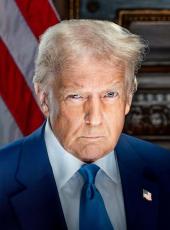
The President. Well, thank you very much.
We've had some very—really good talks today on Gaza with both the Middle East representatives and Kings and all of the top leaders in the Middle East. And we had also a very good conversation with Bibi Netanyahu, trying to get the hostages back, and we're trying to get to the end of the Gaza situation.
It's real—really bad, very bad. And we think it could happen. Maybe it could happen pretty soon. We want the hostages back. We want the bodies back. And we want to have peace in that region.
So we had some very good talks. As you know, I had President Erdoğan here, of Turkey, and we had a great meeting today. I think we had a meeting that was very conclusive in so many different things—things that we wanted, things that he wanted—and that was good. We'll be announcing that sometime later, and he'll be making an announcement too.
But we had a great meeting with Turkey and their very respected President and spent time. We had lunch, and we had a lot of good discussions on those two things.
And we have some Executive orders today to sign that are very important for the country. And we'll start off with one that's a proclamation.
White House Staff Secretary William O. Scharf. Yes, sir.
The President. And want to do that, Will?
Staff Secretary Scharf. Yes, sir.
So today is Gold Star Mother's and Family's Day. This is an annual proclamation. This is to commemorate the fallen, those who have died for all of our freedoms and for our country——
[At this point, the President signed a proclamation titled, "Gold Star Mother's and Family's Day, 2025."]
——and for their families, who have suffered such grievous losses. But this is a proclamation commemorating Gold Star mothers and Gold Star families.
The President. Yes, and they're great people, incredible people, what they have—what they've had to go through. Very few people could have gone through this kind of thing. Gold Star.
Okay. Thank you very much.
I'll put it over here, Steve.
Next up?
Staff Secretary Scharf. Next, sir, we have an Executive order on TikTok. From the first days of your administration, you've charged a team from your—from your administration, led by Vice President Vance, with ensuring that we can preserve TikTok as a platform for the 170 million Americans who use it——
The President. Right.
[The President signed an Executive order titled, "Saving TikTok While Protecting National Security."]
Staff Secretary Scharf. ——while ensuring that their data is properly protected as required by law. With this Executive order, you will be effectively bringing into effect the agreement that will save TikTok and ensure that it can operate safely and securely.
The President. So this is interesting because I had a very good talk with President Xi. I have a lot of respect for him. Hopefully, he has a lot of respect for me too. And we talked about TikTok—and other things—but we talked about TikTok and he gave us the go-ahead.
You know, it's run by American investors and American companies—great ones, great investors. The biggest. You don't get bigger, I don't imagine.
And maybe I'll have J.D.—J.D. was very much involved and in charge of it. And maybe I'll have you say a few words about the deal. He would report back. And the points of the deal, I think, are great for our country.
So, J.D., do you want to give it a little talk, please?
Vice President James D. "J.D." Vance. Yes, sir. Yes.
So thank you, sir, for your leadership and for your help. We really couldn't have done this without the President actually ushering this deal over the finish line. There was some resistance on the Chinese side, but the fundamental thing that we wanted to accomplish is that we wanted to keep TikTok operating, but we also wanted to make sure that we protected Americans' data privacy as required by law, both because it's the right thing to do, but also because it's a legal requirement of the law that was passed last year by Congress.
So we think that we were able to do that. Of course, we're going to keep on working at it, but this deal really does mean that Americans can use TikTok but actually use it with more confidence than they had in the past, because their data is going to be secure and it's not going to be used as a propaganda weapon against our fellow citizens.
We're very excited about it. We appreciate the cooperation of everybody involved, and it's a big day.
The President. And I think I can say that especially the young people, they really wanted this to happen. They did not want to have TikTok close.
And I got, you know, a little used to TikTok. I used it myself during the campaign, and it was very successful, because you know how I did with the young voter. And Charlie helped me a lot too. And he said to me, "You should go on TikTok." And—it actually had—because we—we got record votes with the young voter, as you know, for the election.
So I was a little bit prejudiced in that way toward TikTok. It was very good and very meaningful.
But we have American investors taking it over, running it highly sophisticated, including Larry Ellison. And Oracle, I guess, is going to be a very—play a very big role in terms of security, safety, and everything else.
And literally, I would get a call from friends of mine who were fathers of young people, saying: "Could you do me a favor? Could you get it approved, please? My son is driving me crazy." So we're getting it done, and they have a big audience, and we have great American investors.
And here's your final copy. TikTok. Now, maybe, if you want, we could take a couple of questions on TikTok, and then we're going to get on to something completely different.
Okay? Yes.
Q. Mr. President——
The President. Jeff [Jeff Mason, Reuters].
China/TikTok Ownership
Q. ——and, Mr. Vice President, you mentioned that China was resistant. Can you describe where China is now? Are they fully on board with this——
The President. They're on board, yes.
Q. ——or is there anything more you need to do?
The President. I spoke with President Xi. We had a good talk. I told him what we were doing, and he said, "Go ahead with it."
TikTok Security Concerns
Q. And, on the algorithm, it's still being leased coming from China. Are you satisfied that there's no security concerns for the U.S.——
The President. Yes, I am.
Q. ——that it would push——
The President. I really am.
Q. ——that it would push disruptive content?
The President. The biggest reason is that it's owned by Americans. It's—and very sophisticated Americans and people that love the country and very smart Americans too. So they don't want anything like that to happen.
Yes, please.
China/TikTok Ownership
Q. Thank you. Is there any operational relationship with Chinese entities or staff to execute the deal?
The President. With who?
Q. With the Chinese.
The President. I don't think so. Not that I know. No, we're going to be—this is going to be American operated all the way. And great respect for President Xi, and I very much appreciate that he approved the deal, because to get it done properly, we really needed the support of China and the approval of China.
Yes, ma'am.
TikTok Content Regulation
Q. Mr. President, now that Americans will have operational control, do you want to see the algorithm suggest more MAGA-related content, prioritize more MAGA-related content?
The President. I always like MAGA-related. [Laughter] If I could, I'd make it a hundred-percent MAGA-related. I would. It's actually a good question, but I would. Yes, if I could make it 100-percent MAGA, I would, but it's not going to work out that way, unfortunately. [Laughter]
No, everyone is going to be treated fairly. Every group, every philosophy, every policy will be treated very fairly.
Thank you.
TikTok
Q. Mr. President, do you know the valuation? Do you know if the American company is going to be valued in the billions or——
The President. Well, they valued it very highly.
Q. Do you know what it is?
The President. They're paying—they're paying a big number.
Do you want to talk, Scott? Do you want to say something about value?
Secretary of the Treasury Scott K.H. Bessent. Well, I'll let the Vice President.
The President. Okay. Good.
J.D.
Secretary Bessent. And then I can follow up.
The President. Then you'll say something.
Vice President Vance. Sure, sure. Well, first of all, I want to say all credit goes to the Secretary of the Treasury. Couldn't have gotten it done without Scott. Also, couldn't have got it done without Sean Cooksey on my team. So thanks to them.
The company will be valued around $14 billion. We actually think this is a good deal for investors, but ultimately, the investors are going to make the determination about what they want to invest in and what they think is a proper value. The most important thing is that it does protect Americans' data security. It ensures TikTok is still accessible.
And on this question of the algorithm, which we've heard this a lot, what this deal ensures is that the American entity and the American investors will actually control the algorithm. We don't want this used as a propaganda tool by any foreign government. We want to make sure that our people and our investors actually make these decisions based on what's good for their business, as opposed to what's good for another government's propaganda arms.
So that's what we've done with this deal. I think it's very good for the American people. And as the President said, young people love this. We actually want everybody to access this, whether they're MAGA or not. We just want it to be fair. We want it to be fair to everybody, and we think that's what's going to happen with this new arrangement.
Q. Will the U.S. Government——
Secretary Bessent. And—
Q. I'm sorry.
Secretary Bessent. ——just to follow up on the Vice President. There—were two pieces to the transaction. The Vice President's Office has worked since the spring for the commercial transaction between the investor groups. And then Treasury and a group including the Vice President's Office were in Madrid 2 weeks ago to negotiate with the Chinese, and it was a result of President Trump's close relationship with Party Chair Xi that we were able to get this across the line.
We created a framework for Party Chair Xi to agree. And then on the leaders call, the—Xi and President Trump discussed the final arrangement. So it was one and two, and that was the final piece.
TikTok Ownership Agreement
Q. Will the U.S. Government get any kind of annual payment as a result of this deal?
The President. Taxes. It's going to make money, and we're going to get a lot of money in taxes.
And you know, China wanted to see this go. This is a great legacy for China too. I thought President Xi was great in terms of his approval. We probably could have done it a different way, but it wouldn't have been the same. Wouldn't have been the same security at all. But I appreciated that he approved it. It was very good.
Q. So nothing aside from taxes? There's no part of the deal that is, like, a payment to the U.S. Government, like——
The President. Well, we're going to be announcing different things, but the U.S. comes out great. And I think China comes out great, because they're going to have a very important legacy. And they have many other deals. You know, they have deals with us, and they have deals in here in this country. And you know, they want to be treated fairly also.
TikTok Content Regulation
Q. So, Mr. President and Mr. Vice President, the U.S. company could change the algorithm to push different content? Is that——
Vice President Vance. The U.S. company will have control over how the algorithm pushes content to users. And that was a very important part of it. We thought it was necessary for the national security element of the law. We also just think it's important to protect American users.
Again, we want users to use this platform the way they want to. We want the business to make decisions about content based on the interests of the business and based on the interests of the users. And that's what we think will happen with this new arrangement.
The President. And they're paying a lot of money, and I think, hopefully, it's going to be a great deal. They're very sophisticated people. You'll see a list.
Have you seen a list yet of the people? Well, you've been reading about it.
Q. Heard reports.
The President. They have—it's—I know Michael Dell is involved and Rupert Murdoch is involved, and a lot of—and let's see, we have probably four or five absolutely world-class investors that love the country. They made a lot of money with the country, and many of them are in a somewhat related business, so it works out pretty well. And they're going to be very careful about all of these questions that you've been asking.
Q. Who else, beyond Dell and Murdoch?
Vice President Vance. Well, it's a blue-chip group of investors, and we'll be announcing more about who exactly is involved in the deal in the days to come.
The President. Oracle is playing a very big part.
Vice President Vance. That's right, sir.
The President. And Oracle really understands this. And I think they're actually—and they've been involved for quite a while, running it for the people—the previous people.
And so it's really—I think it's going to be very well protected. Very prestigious deal, actually.
Vice President Vance. On that point, Mr. President, as the President said, Oracle has actually had a role in housing the data for a long time, even when the entity was controlled by the ByteDance organization in China.
So Oracle had a pretty interesting perspective on what was necessary to actually create true data privacy protections for Americans. They were a very important part of getting this thing done.
TikTok Security Concerns
Q. Mr. President, you told us a couple of weeks ago you thought that the security concerns were overrated, but were there legitimate concerns when it comes to safety?
The President. From my standpoint, no, because the people that own it are—you know, they're not China-centric. They're U.S.A.-centric, and they're very smart people.
I guess you could say it about everything. Everything is—what's—what's secure nowadays? Things are—things that you think are totally secure turn out to—not to be. But I think, in this case, it's going to be as secure as you can be because of the ownership and the people. And they have a big investment. You know, it's to their advantage to make sure it's good and safe. Yes.
Anybody else? Do you have a question? No, behind you.
TikTok Ownership/Trade Policy/Tariffs/Support for U.S. Farmers
Q. Well, I just want to say: Do you think this move and getting this deal done, Mr. President—do you think this honors the legacy and life of Charlie Kirk? You mentioned that he specifically pushed you to get involved with TikTok in your campaign and helped you win young voters. Do you think this deal honors him in a way?
The President. Well, I think it's a good thing. It's a good sign. We're doing very well, as you know, with the trade deals. We're doing very well with China and a lot of them.
We were never treated properly. We were for 4 years, actually, but we were never treated very properly by other countries. And we're doing well. We've never done this well. We have—because of the tariffs that are coming in, the deals that are being made, and $950 billion in one case—$950 billion, where previously they paid nothing. We have—as you know, in Japan, it's $550 billion. South Korea is $350 billion. That's up front.
And one of the things I can say—I announced it lightly before—but we're taking in tremendous amounts of money with tariffs. We've never seen anything like it. Nobody has—no country has ever seen anything like it.
I'm going to devote a little bit of that money, a little bit of the tariff money, to our farmers. Our farmers have been incredible. They are the ones that let us survive and eat and enjoy our lives, right? Eat too much, maybe, in some cases, like mine.
But I will tell you, we're going to take some of the tariff money—a relatively small amount, but a lot for the farmers—and we're going to help the farmers out a little bit, because during this transition period, a period where we're taking in incredible amounts of money, we'll have a little bit of a shortfall with the farmers until the tariffs kick in, because they haven't kicked in for the farmers yet.
And I decided before—and I spoke to all of the people here—that I want to make a contribution out of the tariff money—a small percentage of it, but it's a lot for the farmers. It will make the farmers feel very good. Just help them through the transition. And ultimately, they're going to be making a fortune. They may be—we'll be one of the top in the whole world in terms of percentage gotten from the tariffs we're taking in. But we have so much coming in. It's a very small thing.
But I want to, in fact, just get the word out to the farmer, because they'll be struggling until the transition is complete. Then, after that, they're going to do, I think, better than they've ever done before.
Last time, I told—I said, "Get yourself a larger tractor and more land." And that was when they were doing very poorly. And they ended up doing that, and they did very well. That was with the deal we made with China.
Unfortunately, Biden forgot about the deal, and he never enforced. I enforced it till the end, and China was very honorable. But when Biden came in, he didn't enforce it. So, when you don't enforce a deal, they don't do it. So it's terrible. Biden was very bad to the farmers of our country.
So we're going to be doing that. It's an honor to do it too.
Brian [Brian Glenn, Real America's Voice], did you have a question?
TikTok/Business Applications
Q. Yes. I was just going to say: What's your message to the millions of small businesses here in the U.S. that really relied on TikTok to reach their end user and to market their service and their products?
The President. Well, thank you for that question, because honestly, we were getting hit up. They use it for virtual advertising, and they pay very little for it and nothing for it. And small businesses have become very successful because of TikTok. And we didn't think of that. You know, when everyone is saying, "Oh, TikTok," and this and that.
But over the last 6 months, I was called by so many people saying they're going to go out of business if they can't—because they use it virtually as a advertising tool. And without it, they wouldn't have anything. They wouldn't be able to get the word out about their good product or whatever it is they're selling.
So it's a very important thing for small business. It's another reason I wanted to do the deal so badly.
So let's go to another subject now, if we might. Okay?
And, Will, please.
Domestic Agricultural Sector/Tariffs/Interest Rates
Q. Mr. President, can I ask you about farmers, though? About the farmers.
The President. Yes, go ahead.
Q. What does that look like? Is that going to checks to farmers? Or is it going to be through taxes?
The President. Well, we haven't decided that. We'll be dealing with Brooke later and—the Secretary of Agriculture. And we'll figure out how to get money to the farmers.
And again, this comes out of the large amount—hundreds of billions of dollars—of tariff money that's pouring into the country. The tariffs—remember what I said a long time ago; I said it's the greatest word. It's my favorite word in the world. Then I had to say—I was forced to say other things, and, of course, rightfully so: love, family, religion. [Laughter] So I think I put tariff number five.
I was forced because the fake news did a big number on me. It's one of those little things.
But let's say it's my fifth favorite word, the word "tariff."
But it's making our country very rich. And when our country is rich, I'm able to help the farmers and I'm able to help even other countries that are in trouble. You know? But we're able to help people that are in trouble.
Medicaid, Medicare, Social Security—it's all a benefit of this tremendous amount.
And I hear numbers coming in today, Scott, where the numbers were very high. Right? The——
Secretary Bessent. The economic numbers are off the charts, sir.
The President. Unfortunately, right? [Laughter] Because this is the only country in the world where you announce great numbers and the stock market goes down. Because when you announce great numbers, they immediately want to take that success away by raising the interest rates.
Why can't they—you announce great numbers and let them lower the interest rate so you can make numbers? This is the only country in the world—they announce—we just—I don't know if you heard. Could you just tell them what the number was—[inaudible]?
Secretary Bessent. It was 3.8-percent growth, the biggest in years. And the important thing, as the President says: This is going to be noninflationary growth, just like it was in his first term.
So, strong growth, low inflation, real wage gains. And to the question on small business, small-business optimism under President Trump last week hit a multiyear high. Multiyear high.
So small businesses, Main Street is back under President Trump.
The President. But isn't crazy? So I saw the market was down a little bit today. I mean, in all fairness, I don't feel guilty, because we've set every record you can imagine. [Laughter] But it was down. And I said, "Oh, the numbers must be good," meaning the growth numbers are phenomenal.
And again, this is during—but little bit of pre—the heavy, you know, the really—success and the money pouring into our country through the tariffs. And I just say, "Why can't we have great numbers and lower the interest rates so we have even greater numbers?"
So people were saying, "Oh, the numbers are so good, they're going to have to raise interest rates." That doesn't have to happen. And there's no inflation. We have really—I mean, the only thing we have is great success. We're having unbelievable success.
So the numbers are much higher than anticipated, except for by me and Scott and some of the other people. And they'll get a lot higher than that too.
But I don't want to every time we have good numbers say, "Let's take all the juice out by raising interest rates." [Laughter] It's so backwards. It's so backwards.
Secretary Bessent. Well, Mr. President, they don't appreciate the importance of the third leg of your stool, because trade, taxes, and deregulation allows for significant upside growth without inflation. So, eventually, the people at the Fed will be able to focus on this, like Alan Greenspan did in the nineties. You can have strong growth and low inflation, and I think we can get the stock market up, and Wall Street, Main Street both doing well.
The President. And low—we want low interest rates. There's no reason that every time we announce these record numbers—these numbers are way above projections by, you know, all the great geniuses out there. And I knew this was going to happen.
So they had 71 different people, and only two got it right: me and another gentleman from, I think, my wonderful Wharton School of Finance, actually. [Laughter] So, anyway.
But I really want you to look at that. Every time we have good numbers, they say this is a good time, because they're guarding against inflation that may happen in 2 years from now. We have to change our thinking. We should be rewarded for good numbers, not penalized.
National Economy/Energy Prices/Former President Joseph R. Biden, Jr.
Q. So, Mr. President, is that 3.8, is that the start of a 3-percent growth for the entire year, or is that a one-off?
The President. Well, you know, you know the number was projected at 2——
Q. Right.
The President. ——because we're in a little bit of a transition period. But that transition period is ending faster than we thought—on tariffs. The money coming in is much greater than people thought, and there's no inflation, essentially. There's no inflation.
We just went through the worst inflation in the history of our country under Sleepy Joe Biden. He was sleeping, and the inflation was really bad. Worst ever. They say 48 years. I'll take that too. But I think it was probably the worst inflation we ever had because of spending and energy going through the roof and everything else.
By the way, energy is way down. And you're going to really be impressed when you hear what happened today with President Erdoğan of Turkey. I think it's great. For both countries, I think it's great. We have great relationships with a lot of countries.
And you may be even more happy when you find out, because we spoke with Bibi Netanyahu today, and we spoke to all the leaders in the Middle East, who are great people, and we're getting pretty close to having a deal on Gaza and maybe even peace, which would be the first time in about, what, 2,000 years, I think? [Laughter]
Q. You hinted at a——
The President. In the region, I'd say the first in—Steve, what would you say? First in 2,000 years or maybe 1,000?
Deputy Chief of Staff for Policy Stephen Miller. I would say so, Mr. President.
The President. Huh?
Deputy Chief of Staff Miller. Two millennium.
The President. It's a long time.
Yes, go ahead.
Russian Oil and Gas Supply/Turkey-U.S. Trade/Hungary
Q. Did Erdoğan agree to stop buying Russian oil? Did he say that?
The President. I don't want to say that, but if I want him to, he will, yes.
Q. But he didn't make that assurance to you today?
The President. Well, I didn't say, "Okay, you stop." But I—yes, I believe he—yes, I believe he will stop it, yes.
Q. Did you make a deal on fighter jets?
The President. You know why? Because he can buy from a lot of other people. He can buy from a lot of other people.
You know who really can't is Hungary. Hungary has got—you know, they're landlocked, and they don't have a nice ocean where ships can sail in from all over the world. You know, they have one pipeline coming, because I spoke with—he's a great guy. He's a great friend of mine. But you know, that's a harder one for them. And Slovakia too. They're sort of married to one pipeline.
So I just don't want to have people go blaming them when, you know, I—we spoke to them at length today, and this seems—it seems like they—you know, for them, it's a little—
But that's a—yes, Turkey has a lot of options. He's a great President, a very smart man, and he's going to take—he's going to—he's going to do what's right.
But we had a very good conversation having to do with the purchase of military equipment, et cetera.
Any other questions?
Turkey-U.S. Trade
Q. Did you make a deal on the fighter jets, Mr. President?
Q. Did you make deal on F–35s, Mr. President?
The President. I will be able to easily if I want. So we may do that, yes.
Q. But not yet?
The President. Well, it depends. He's going to do something for us, yes.
Please.
Q. Is the U.S. going to lift sanctions on Turkey?
Q. Can I ask you: We're a few days away——
The President. By the way, here we go with this guy. [Laughter]
Go ahead. Let's go. Let's hear the question.
Potential Lapse in Federal Government Appropriations/Democratic Party
Q. We're a few days away from the end of the fiscal year and a potential shutdown.
The President. Right.
Q. Is there going to be a Government shutdown?
The President. Could be, yes, because the Democrats are crazed. They don't know what they're doing. They want to have the border opened up so that criminals can pour in.
You know, we're doing unbelievable. Border is closed, and people are coming into our country legally. They want to have—they continue to want to have men in women's sports. They continue to want to have transgender for everyone. They want to raise everybody's taxes at a number that's not sustainable.
This is the only time in the world I've ever seen a party that wants to raise taxes. You know, I grew up in a family where I'd watch politics, and I always liked it, from the time I was very young. But I'd always see politicians say, "We will lower your taxes." These guys, they campaign on raising your taxes. But they want to raise taxes very substantially.
Q. Well, the one thing—the one thing they're concerned about—I mean, look, Republicans have total control of Washington. You guys have control of the House, the Senate, and there's you. But——
The President. Well, when you say "control"—so we need 60 votes for this.
Q. Exactly.
The President. And we have 53 Republicans.
Q. Right. And the one thing——
The President. And we need seven Democrats.
Patient Protection and Affordable Cart Act Provisions/Tax Code Reform
Q. And those seven Democrats and others are asking for an extension of a tax credit on people who get the Affordable Care Act and some other Government-backed health care. So, are you willing to negotiate on that issue?
The President. Well, what they're really asking for is they want to pay for illegal aliens that have come into our country by the millions and get onto the rolls, and they want to pay. And our people don't want to do that. Our people are taxed enough.
You know, we just approved the largest tax decrease ever in the history of our country, including the extension of the previous Trump—you know, Trump tax cuts. The tax cuts that we just approved, they want to use those tax cuts to give the money to illegal aliens, people that came into our country illegally and that are leaving the country.
Q. So why not negotiate——
The President. You know, there's been a self-deportation because of what we've been doing that's been incredible.
Okay. Yes, please.
Meeting of Military Leaders and Combatant Commanders/U.S. Military Readiness
Q. Sir, Secretary Hegseth is inviting military leaders from all around the country on Tuesday. Will you also be there?
The President. From all around the country to what?
Q. From all around the world.
Q. To Virginia. He's——
Q. To Virginia.
Q. He's inviting the generals——
Q. He's having the—
Q. ——and admirals to Virginia for a big meeting. They're not sure why.
Q. Do you know why he's doing that?
The President. Well, I know. I love it.
Q. Why is he doing it?
The President. I mean, I think it's great. Let him be friendly.
[Several reporters began asking questions at once.]
Let him be friendly with the generals and admirals from all over the world.
Why, is there some——
Q. But is there a specific reason why they're going to—[inaudible]——
[Several reporters spoke at once.]
The President. No, but is there something wrong with it?
U.S. Military Readiness/Meeting of Military Leaders and Combatant Commanders
Q. Will you be there, Mr. President? And what is it about? Will you be there personally as well? And what is it about?
The President. Well, I'll be there if they want me. But why is that such a big deal? I mean, he's—[laughter]—the fact that we're getting along with the generals and admirals from all—I'm—remember, I'm the President of peace.
Vice President Vance. He's—
The President. It's good to get along. It's good.
Q. Well, it's unusual to invite——
The President. You act like this is a bad thing. Isn't it nice that people are coming from all over the world to be with us?
Yes.
Q. Mr. President——
Vice President Vance. It's not particularly unusual that generals who report to the Secretary of War and then to the President of the United States are coming to speak with the Secretary of War. It's actually not unusual at all, and I think it's odd that you guys have made it into such a big story.
The President. Is it a big story? I mean, is it—[laughter]—I mean, is——
Vice President Vance. I don't think it is, sir.
Q. I think people just want to know what the topic is. Can we know the topic?
The President. I would think it's—no, but—but isn't it a good story? [Laughter] I mean, you know, we're respected from all over the world as a military force.
You know, I rebuilt the military during my first term, even though we gave a chunk of it away to Afghanistan. But we're talking to Afghanistan too, by the way, about Bagram and about that. But that's a very small amount compared to what we rebuilt it by.
But I rebuilt the military, and we're very respected. We have the strongest military anywhere in the world, without question. We have the greatest equipment in the world. We're selling the equipment to others—countries. And a lot of generals want to be here, and they want to look at the—they're also going to be touring equipment sites. They're going to be talking about the newest weapons, et cetera, et cetera.
But I think it's great when generals and top people want to come to the United States to be with our now-called Secretary of War.
Does everybody like the name? I do.
Yes, please.
Ukraine/Russia
Q. You said something really interesting this week about Ukraine, that you thought Ukraine could get back all the territory that Russia had taken.
The President. Yes, they have a shot at it, because Russia——
Q. What prompted you to change your thoughts on that?
The President. Well, because I've been watching the way Russia is—and what Russia has been doing. I'm very dissatisfied with what Russia is doing and what President Putin is doing. I haven't liked it at all. He's killing people for no reason whatsoever. And they are doing very poorly, considering they have put it all out on the line. They are—their economy is going to hell. They're bombing the hell out of everything. And they're picking up—very little territory, if any. In fact, they're losing some territory.
So I think it's been very bad for the reputation of Russia. This war should have been over. If this were our war, we would have had it over in 1 week.
Q. But you didn't used to feel that way, right?
The President. And they're getting—they're getting into the fourth year, Jeff.
Q. Yes.
The President. They're getting into the fourth year now. Four years of fighting, and you see what they've taken. In the last month, they've taken very little. And you've been reporting on all the bombing, all the drones all over the place—900 drones coming into certain areas, like Kyiv, in one night. And with all of that work, they've taken over very little.
So, yes, I'm very disappointed in President Putin. I thought—I solved seven wars. In fact, we have a great leader coming. We have the Prime Minister of Pakistan coming and the field marshal. Pakistan field marshal is a very great guy and so is the Prime Minister—both. And they're coming. And they may be in this room right now, I don't know, because we're late. [Laughter] And I said maybe they'd like to join the——
[Several reporters spoke at once.]
They actually may be somewhere in the—in the beautiful—in the beautiful Oval Office.
Yes, please. Behind you.
West Bank, Palestinian Territories
Q. Mr. President, quickly on Gaza. Did you promise leaders this week that you would not allow Israel to annex the West Bank? Is that something that you spoke with Netanyahu directly?
The President. I will not allow Israel to annex the West Bank. No, I will not allow it. It's not going to happen.
Q. Did you speak with Netanyahu about this directly?
The President. Yes, but I'm not going to allow it. Whether I spoke to him or not—I did—but I'm not allowing Israel to annex the West Bank.
[Several reporters spoke at once.]
There's been enough. It's time to stop now. Okay?
Q. Can I ask you about immigration?
Q. On—
The President. Yes, please.
Representative Jasmine Crocket/Democratic Party
Q. Mr. President, Jasmine Crockett recently appeared——
The President. Jasmine Crockett? She's—[laughter]—Jasmine—she——
Q. Recently, I think—
The President. Remember what I said?
Vice President Vance. She—[laughter].
The President. Is she a relation to the late, great Davy Crockett? I don't think so.
Vice President Vance. They're third cousins, sir.
Q. She——
The President. Jasmine Crockett—let me tell you, before you even ask—she's a very low-IQ person. I mean, if we ever had to pass an aptitude test, that's the one should take one, because she shouldn't even be in the——
So I have no idea what you're going to—but I don't think we should waste our time. This is a low-IQ person who I can't even believe is a Congressperson. Between her and Ilman [Ilhan; White House correction] Omar and the group—you know, I met the head of Somalia. Did you know that? And I suggested that maybe he'd like to take her back, and he didn't want her. [Laughter] He said, "I don't want her."
Okay. What else? [Laughter]
[Several reporters spoke at once.]
Go ahead. You want to—let's hear what—let's hear what Crockett said. Go ahead.
Q. She compared ICE raids to slave patrol. I want to ask you——
The President. To slave?
Q. To slave patrol. I want to ask you if you think that there should be consequences for Members of Congress who make these types of comparisons or use this type of language.
The President. Yes. Well, I think she's gone over the line, and I think a lot of the people—look, the Democrats have become radical-left lunatics. They have policies that nobody is going to buy.
And you know, I see what's going on in New York. We're going—we're going to have a—perhaps a communist mayor. Because it's split up. You know, if the people would get together and have one candidate, they'd have a—I think, a pretty good chance, but it looks like maybe they're not going to do that. But we're going to end up with a communist mayor. It's not even believable. My beautiful New York.
When I left New York to become President, it was a great place, but it was the beginning of bad things, because we had de Blasio had just started as mayor, and I said, "This guy is a bad—this guy is a real nutjob." Went to Harvard to teach management. Can you believe it? [Laughter] He went to Harvard to teach city management, along with the mayor of Chicago, who went to Harvard to teach—the two of them are teaching how to manage a city into—manage it into hell, is what they do. [Laughter]
But that was the beginning, and now we're going to go a step further. Now we're going with the communists.
Can I be honest? I think it's the greatest thing to ever happen to the Republican Party. I really do. I think if a Communist takes over New York City, I think that's—that's a gift to the Republican Party. It's sad for New York, but it's a gift. And New York will recover, because, you know, sometimes you need a shock like that to straighten you out.
Q. So you don't think——
The President. But it's—politically, it's probably a very good thing.
Federation Internationale de Football Association (FIFA) World Cup/District of Columbia Crime Statistics/Public Safety in Chicago, Illinois
Q. Mr. President, can I ask you about immigration and crime and the World Cup, actually. So you——
The President. That's a lot of—that's a lot of questions.
Q. I know. You have a number of—you have a number of cities that are pushing back against your immigration deportation move, as well as your crime initiatives. Some of those cities——
The President. I don't think they're very much pushing back at all.
Q. But some of those cities have World Cup games.
The President. Yes.
Q. Seattle. San Francisco.
The President. They're going to be very—they're going to be very secure.
Q. Could—well, secure, but could those games move if they don't cooperate with your crime push——
The President. Well, that's an interesting——
Q. ——and with your immigration push?
The President. I guess. But we're going to make sure they're safe. They're run by radical-left lunatics and—that don't know what they're doing.
Look at Washington, DC. I just got numbers. There's, like, no crime in Washington, DC. You, Jeff, will not be mugged walking down the street. [Laughter] You can walk down the street with your family. You can walk down your street with your wife, your daughter, your son. And you're not going to be—we took out 1,700 career criminals that we're not allowing back. And we have this city in great shape.
You know, there was a time when every single—not long ago—when every single week you'd have at least one murder. And look what's happening with Washington. It's safe. I went to dinner in Washington just to prove a point. I gave a press conference in the middle of a street. I wouldn't say Secret Service was thrilled—[laughter]—but I did it, and here I am.
Look, Washington, DC, is such a great example of what can be done. We did it in 12 days. We made it very safe in 12 days, and now it's much safer than that.
One other thing. I drove around Washington over the weekend, and I said, "Look at the difference." The grass looked great. Everything looked great.
You know, we had a lot of our National Guard—and we didn't ask them to do it. They did it themselves. They're proud. They're great. And they were picking up paper. They were cleaning it. The place looked really beautiful.
So we have a great Washington, DC. We—as you probably know, we're going into Memphis, and we're going into some other cities, and very soon we're going to go into Chicago.
It will be safe for the World Cup. If it—if I think it isn't safe, we'll move it into a different city, absolutely. We'll take the World—
[Several reporters spoke at once.]
If I think it's not—it's actually a very fair question. If I think it's not safe, we're going to move it out of that city if, like, the Governor of Illinois, who is, you know—look, last week—between last week and the week before, 11 murders and 38 people were shot. Then he gets up and says, "This is a very safe"—and then he says crime is better. The reason crime is better is because Kash put, about 5 months ago, a whole team of FBI people there to get ready for when we go in, and they've lowered it a little bit—you know, like 20, 25 percent, which isn't good enough, but it's a good start. But that was only put there because they're preparing for us to go in. And they've done—by the way, they've done a good job.
So then Pritzker gets up, "We've lowered crime 25." It's because the FBI was there.
So, no, if any city we think is going to be even a little bit dangerous for the World Cup or for the Olympics—you know, where they have Olympic overthrow, right?—but for the World Cup, in particular, because they're playing in so many cities—we won't allow it to go to—we'll move it around a little bit. But I hope that's not going to happen.
Yes.
U.S. Immigration and Customs Enforcement/The President's Cabinet/Afghanistan
Q. Mr. President, Director Patel this morning indicated that the shooter in Dallas had been using an app to track ICE. Does your administration have any plans to take down those apps or get them removed or any sort of action against them?
The President. Well, I can't tell you about that, but it tells you, when they want to wear masks or they want to hide a little bit, why that's so important.
But these are great patriots, the ICE, and what a tough job they have. What an unbelievably tough job they have. And think of it: What are they doing? They're taking hardcore criminals out of our country and putting them back. These were largely criminals that were given to us by Joe Biden and his group of radical maniacs that surrounded this desk, just like these people surrounding the desk now, but they're not maniacs. [Laughter] They're very solid people.
Vice President Vance. Thank you, sir. [Laughter]
The President. I'm glad I prefaced.
But they're great. We have a great Cabinet. We have great people. And he didn't have great people. He had terrible people.
Look at Afghanistan. Look at the people he had running our military—that that could happen. The most embarrassing day in the history of our country was Afghanistan, and 13 young people died. They don't ever talk about the 38 that were horribly wounded with legs and arms and everything else. Really horribly wounded.
So the country is respected like it's probably almost never been respected before. I think we're respected at a level—and a year ago, it was a dead country. We had a dead country a year ago. This country was dying. It was really—it was really in bad shape.
Let's talk about the next subject, can we?
Staff Secretary Scharf. Yes, sir.
One of the most powerful deterrents we have to violent crime is the death penalty. As you said, your administration has taken bold, decisive steps to ensure that Washington, DC, is once again a safe and secure city for its residents and all who visit.
This is a Presidential memorandum that directs your attorney general and your U.S. attorney for the District of Columbia, Judge Jeanine Pirro, to fully implement the death penalty here in Washington, DC, where the evidence and facts of a case indicate that the death penalty should be used.
The President. Okay. Everybody understand? Death penalty in Washington. You kill somebody or if you kill a police officer, law enforcement officer: death penalty. And hopefully, there won't be that.
So, again, it's way down. I mean, we have had week after week after week where we haven't had a murder. I said that the other day in front of the President of Poland. The press was here, and I said, "Ladies and gentlemen, I'd like to announce that Washington, DC, has not had a death in 4 weeks—a murder." And he looked at me, and he goes, "Is that good or bad?" You know, he's saying, "What kind of a place is this?"
But it's true. For years, I mean, every week, essentially, somebody got killed or more than one. And this is a very safe city right now. We don't play games.
And you know, it's interesting: We took these careers out—career criminals that—they call them "careers." They just—they left the word "criminal" out. But we took the careers out of here. And they're now brought back to their homes, their—or they're in jail, or they're in a jail in another country. And hopefully, they're not coming back. And we have to maintain it. You can't just leave, and we have to maintain it.
We've gotten along fairly well with the Mayor. You know, she's in a party that hates that the—the city is becoming safe. I mean, they're actually criticizing her because the city is becoming safe.
But this is becoming a very—this is, right now, a very, very safe city. This is considered—this went from the most unsafe city in the country to the safest city in the country. There's no city any safer. That's a pretty big achievement.
And we really did it in 12 days. But if you add an extra week to it, that would be nice. And, I mean, you can go out to dinner. Restaurants are booming. You know, the restaurants were dead. They were dead. Even if you got to the restaurant, then somebody would come in and hold you up. You know, they'd hold up the whole restaurant.
They go to Uber—young ladies in the White House, they'd call Uber for protection. They'd run to the car because they were petrified to be from the entrance of their building to the car. Now they feel safe. They're in the car, and then the car gets hijacked while they're in the back of the car.
This is what we were living in. We were living in hell.
The people that work in the White House, every time they see me—young women, in particular—they say, "Thank you, sir." And I don't even ask them what—about what. I know exactly. I made their lives—now they're living in a beautiful, glamorous place called Washington, DC, with no crime. And that's the way it should be.
Okay. This is the death penalty for somebody that kills people in Washington, DC. I think it's capital. It's very interesting: capital punishment, capital city.
Staff Secretary Scharf. I like that, sir.
The President. Right? It's capital. Capital, capital. But this is our capital city. We can't allow that to happen.
People come in from Iowa to look at the Lincoln Memorial, and they end up getting killed. It doesn't happen anymore. It's not going to happen. And if it does happen, it's the death penalty for the person that did it.
And this goes into effect——
Staff Secretary Scharf. Yes, sir.
The President. ——right? Pam, is that right?
Attorney General Pamela J. Bondi. Yes, sir.
The President. Could you speak a little bit about that?
Attorney General Bondi. Yes, sir. Not only are we seeking it in Washington, DC, but all over the country again.
[The President signed a memorandum titled, "Enforcing the Death Penalty Laws in the District of Columbia to Deter and Punish the Most Heinous Crimes."]
And as you saw very recently, we are now moving the inmates who were on death row—who Joe Biden or the autopen commuted their sentences off of death row—we're moving them to supermax facilities, where they will be treated like they're on death row for the rest of their lives, President Trump.
The President. Okay. That's a big statement. Thank you very much.
Okay. I see some of you shaking your heads very positively.
Thank you, Brian. Thank you, fellas. Those——
Capital Punishment
Q. Well, you know, you said on the campaign trail that you were for——
The President. I—said it. Yes.
Q. ——the death penalty if anybody—an illegal killed a U.S. citizen or a police officer.
The President. That's right.
Q. So this just reinforces your campaign promises.
The President. Correct. And most people really like it. And Washington, again, it's going to serve as a beacon, because you have to do it. These are bad people.
When you look at that guy, the guy that killed the young lady in the train in North Carolina, that—he'll be in trial for years, years, years. He'll get a good lawyer. Somewhere along the line, somebody will come along. And what he did to that young lady—and she went into that train scared. You know, when she went in, the way she sat down, she was scared to just be there. She just wanted to not pay any attention to anybody, just not be noticed.
And she had her throat slit. We don't want that in this country anymore. We're not going to have it in this country anymore.
Thank you very much.
Next.
Staff Secretary Scharf. Lastly, sir, this is a Presidential memorandum on countering domestic terrorism and organized political violence.
In recent weeks, months, and years, we've seen a tremendous upsurge in some highly visible but also other acts of domestic terrorism and organized political violence being perpetrated by radical, politically motivated groups all over the country.
What this Presidential memorandum will do is set off an administration-wide response to that, ranging from the Joint Terrorism Task Forces to other components of the Department of Justice to the Department of Homeland Security and the Department of Treasury. We're looking at interdicting these groups, preventing them from performing acts of violence, and also looking at sources of organization and funding and support——
The President. That's great.
Staff Secretary Scharf. ——that prop them up and allow them to do the acts that they have been doing.
The President. We're looking at the funders of a lot of these groups. And you know, when you see the signs, and they're all beautiful signs made professionally, these aren't your protesters that make the sign in their basement late in the evening because they really believe it. These are anarchists and agitators—professional anarchists and agitators. And they get hired by wealthy people, some of whom I know, I guess. You know, I probably know them.
And you wouldn't know it. You're at dinner with them, everything is nice, and then you find out that they funded millions of dollars to these lunatics.
Steve, could you say a couple of words, please?
Deputy Chief of Staff Miller. Yes, Mr. President.
This is a very historic and significant day. This is the first time in American history that there is an all-of-Government effort to dismantle left-wing terrorism, to dismantle antifa, to dismantle the organizations that have been carrying out these acts of political violence and terrorism.
[The President signed a National Security Presidential Memorandum titled, "Countering Domestic Terrorism and Organized Political Violence."]
What we have seen—if you look at whether it be going back to the riots that started with Black Lives Matter and all the way through to the antifa riots, the attacks on ICE officers, the doxing campaigns, and now the political assassinations—these are not lone, isolated events; this is part of an organized campaign of radical-left terrorism. It is structured. It is sophisticated. It is well funded. It is well planned. There is really no parallel like this anything—to anything else in the country right now.
There is a entire system of feeder organizations that provide money, resources, weapons. And when they're attacking ICE officers, they're attacking Federal buildings, where they're isolating public officials for harassment, doxing, intimidation, and ultimately attempted assassination, it is all carefully planned, executed, and thought through. It is terrorism on our soil.
Because of this Executive order, Kash and Pam are going to have the tools they need, working with Scott, to take these organizations apart piece by piece. And the central hub of that effort is going to be the Joint Terrorism Task Force, or JTTF, which sits inside the Federal Bureau of Investigation.
But for those at home who are worried about terrorism in this country, they need to understand: Because of President Trump's strength, because of his vision, because of his leadership, we are now going to use the entire force of the Federal Government to uproot these organizations, root and branch. And again, it's only possible because of President Trump and his leadership.
The President. Thank you, Steve.
Kash, please.
Federal Bureau of Investigation Director Kashyap P. "Kash" Patel. Yes, as Stephen was saying, Mr. President, thanks to your leadership, crime is going downward in a tremendous fashion, and that's what we want for every city in America.
And the FBI's premier flagship enterprise, the Joint Terrorism Task Force, are honored to lead this initiative with our partners at Treasury and Homeland Security, because our citizens are being attacked by, as Stephen said, organized violence and is being paid for not by them, by other people.
So what we are going to do, combining forces, as Scott and I have done over these last few months, is follow the money. People and organizations have collected funds and put them out into the streets of America and organized violence across our country.
And thanks to your recognition of this and this Executive order and the AG's leadership to lead out and prosecute these individuals, we are properly going to chase them down like the domestic terrorists that they are, and our streets and our communities are going to be safer because the JTTF and the FBI and Treasury and DHS and DOJ are going to combine forces like never before to root out this new evil that is perpetuating our criminal activities across our societies.
And we are just so thankful for your leadership and recognition of it. It's not easy to do.
The President. Thank you very much. Good job. Thank you very much.
Pam.
Political Demonstrations/Portland, Oregon
Q. Who specifically do you want to target?
The President. What?
Q. Besides antifa, is there a specific group or person you're targeting with this Executive order?
Attorney General Bondi. Any organized group.
Q. Any organized group?
Attorney General Bondi. Any organized group who is committing these—who are committing these crimes, and we're working with the Secretary of Treasury.
You know what law enforcement has told us under President Trump's leadership? He's taken the handcuffs off law enforcement. They can do their jobs now, thanks to you, President Trump. And that's what's happening.
And all of these agencies that Kash mentioned, we work hand in hand together. Our prosecutors—we're following the money with Treasury. We're working with Homeland Security. Kash's agents, all of our agents—DEA, ATF, U.S. Marshals—combined are working—and with State and local government—to take these people off the streets who are jeopardizing lives.
[Several reporters spoke at once.]
Vice President Vance. Can I just illustrate this? So I was talking with Kash and Stephen about this a couple of days ago, sir. So I believe it was in Oregon where you had a Federal building where there were men in black ski masks who were committing acts of violence, who were shutting down a Government building.
To the President's point, they don't come from nowhere. These are paid people. This is organized. They're committing acts of political terrorism on American soil. And it's time we had a Government that looked out for the American people, rather than the people who are committing violence against the American people.
Q. But, Madam Attorney General, can you comment——
The President. When you go out to Portland and you see what's happening in Portland——
Vice President Vance. Crazy.
The President. ——this is like nobody has ever seen anything like it. Every night—and this has gone on for years—they just burn the place down. And you know, the shop owners, most of them have left, but the few shops that are open, they just use plywood and—just like three-quarter-inch plywood. They don't put storefronts there because they know it's going to be burned down.
These are professional agitators.
Vice President Vance. That's right.
The President. These are bad people. And they're paid a lot of money by rich people, some of whom we know. I'm sure I know some. I don't—if I—knew, I wouldn't associate, because I'll be in trouble—[laughter]—because Pam will say, "Why are you associating with this person?"
But I will tell you that these are bad, bad people, and they're paying a lot of money, millions of dollars.
But take a look at Portland sometime. These are wild—these are crazy people, and they're trying to burn down buildings, including Federal buildings.
And on my list of things that I want to do before we finish up with the cities—because I think we're going to whip the cities back into shape, and we have to. We cannot let our cities—and that's a small example, but it's the most violent example. It's every night, and they've done it for years. You'd think maybe at some point they made their point, and what are they doing?
But we're going to get out there, and we're going to do a pretty big number on those people in Portland that are doing that. They're professional agitators and anarchists.
Q. Could you name a few of the groups?
The President. They're actually anarchists.
Yes, go ahead.
Political Organizations
Q. Just so we can know—[inaudible]—could you name a few of the groups?
The President. Why don't you defend—let's see you defend them, Jeff.
Q. No, I'm not defending anyone. I just want—so that we can just explain this in our stories, could you name a couple of the groups?
The President. You don't explain it right, though, Jeff.
Q. Well, I just—I'm just asking for some names.
The President. Go ahead. Let's go. Maybe let's give you another chance. Go ahead.
Q. No—antifa, Soros——
The President. Yes.
Q. What names are we talking about?
The President. Well, Soros is a name, certainly, that I keep hearing. I don't know. But Soros is a name that I hear. I hear a lot of different names. I hear names of some pretty rich people that are radical-left people.
Maybe I hear about a guy named Reid Hoffman. Somebody—he's a pretty rich guy, I guess, and I hear about him. I don't know. Maybe—it maybe could be him. Could be a lot of people.
We hear the same names. But they're bad, and we're going to find out. And if they are funding these things, they're going to have some problems, because they're agitators and they're anarchists. These are anarchists. Really bad.
Okay. Yes, please.
[Several reporters spoke at once.]
Q. Mr. President, are you——
The President. Who are you with?
Q. Mr. President——
The President. Who are you with?
Q. I'm with The Center Square. Sarah Roderick-Fitch is my name, sir.
There's also—as you know, antifa is not just a domestic terror—or now a domestic terror organization. It's also international. I know the Netherlands is looking at also designating them a terror organization.
The President. Right.
Q. Have you been working with your intel community and your DNI to possibly expand that to making them—designating them——
The President. Yes, we have.
Q. ——an international terror organization?
The President. Yes, we have been. Yes.
It's an international—in many cases, it is international.
Yes.
"Antifa" Organization/Political Demonstrations/Public Safety Concerns in Chicago, Illinois/Deployment of National Guard to U.S. Cities
Q. Mr. President, on antifa, if someone takes to the streets of America and says they're antifa, what happens to them? What will happen to them?
The President. Well, I'd say the maximum under the law, and we'll see.
Now, if they kill somebody—you just—we just signed the death penalty, so it depends where it is, but if they kill somebody, which they do—I mean, people are dying. You go out to Portland; people die out there. Many people have died over the years in Portland. Portland is—I don't know how anybody lives there. It's amazing.
But it's anarchy out there. And that's what they want. They want anarchy, like when they attacked Seattle and took over a big percentage of the city. I was going to go out, and we were going to do a big number. They heard that, and everybody broke up all of a sudden.
But you know, you have Governors that have to run that, and a lot of them don't do that. I don't like to go in. I'd rather have—like, I'd rather have Pritzker's support when we go into Chicago. But if we don't have it, that's okay too, because we're paramount, and we will do what we have to do.
We're going to make Chicago safe. We're going to make every—we're going to make as many as we can, and usually that involves a surge. But what we did with—in the case of Chicago, by having the FBI go out there 5 or 6 months ago, we brought it down a little bit. You know, a little bit is 25 percent, so it's not so little, but it is when you're talking about the kind of crime and killings and murders that you hear in Chicago. But we're going to get it.
Chicago is a great city. As the Union Pacific said—the head of the Union Pacific, who's a great guy. Started off as a low-rung guy. He said he started in a caboose, and now he's the chairman of the Union Pacific. But—and he's a great guy. But he said, "Sir, don't lose Chicago." The way he said it, I said, "Boy." It really hit me. You know, here's a man that knows all the cities. The Union Pacific, I guess, is our largest railroad, and he knows all the cities. He's been doing it for 45 years. And he said, "Sir, don't lose Chicago."
And the way he said that meant a lot to me, and we're going to go into Chicago very soon.
Q. Do you think you'll get Pritzker's support?
The President. We're going to take care of Memphis. We're going to take care of Memphis, where you can't—you can't walk a block without getting shot. We're going to take care of that one, and—just like we did Washington, DC. And we're going to do Chicago very soon.
Yes.
[Several reporters spoke at once.]
Former Federal Bureau of Investigation Director James B. Comey
Q. Mr. President, I want to ask about James Comey, if I could? We—we heard there could—could be an indictment on James Comey. Do you know if there is an indictment, or, Madam Attorney General, is there?
The President. I don't know. I know it's going on because I read the papers just like you do, right? So I don't know.
Do you have anything to say about that?
Attorney General Bondi. We can't comment on that.
The President. Yes.
[Several reporters spoke at once.]
Philanthropist George Soros
Q. Madam Attorney General, can you comment—can you comment on a New York Times—Madam Attorney General, can you comment on a New York Times report saying that Justice Department officials have asked attorneys to target a George Soros–funded group? And is this Executive order that you just signed a part of the effort?
Attorney General Bondi. I'm not going to comment on whether there is or is not a pending investigation, but everything is on the table right now.
[Several reporters spoke at once.]
The President. I don't think—I don't think anybody has to ask, because if you look at Soros, he's at the top of every—in fact, sometimes I say, "Could he be involved in this many things?" But he's in every story that I read. Stories that I read keep talking about Soros. And so, you know, I guess he'd be a likely candidate.
Thank you very much, everybody. Appreciate it. Thank you very much.
Thank you.
NOTE: The President spoke at 4:21 p.m. in the Oval Office at the White House. In his remarks, he referred to Prime Minister Benjamin Netanyahu of Israel; Larry Ellison, chairman of the board and chief technology officer, Oracle Corp.; Michael S. Dell, chairman and chief executive officer, Dell Technologies; Michael S. Dell, chairman and chief executive officer, Dell Technologies; Rupert Murdoch, chairman, News Corp.; Secretary of Agriculture Brooke L. Rollins; Prime Minister Viktor Orban of Hungary; Prime Minister Shehbaz Sharif and Chief of Army Staff Asim Munir of Pakistan; President Hassan Sheikh Mohamud of Somalia; New York State Rep. Zohran K. Mamdani, in his capacity as a New York City mayoral candidate; former Mayor Bill de Blasio of New York City; former Mayor Lori Lightfoot of Chicago, IL; Gov. Jay R. "J.B." Pritzker of Illinois; President Karol Nawrocki of Poland; Mayor Muriel E. Bowser of Washington, DC; Decarlos Brown, Jr., suspect in the fatal stabbing of Iryna Zarutska on a Charlotte Area Transit System light-rail train in Charlotte, NC, on August 22; Reid Hoffman, cofounder, LinkedIn; and Jim Vena, chief executive officer, Union Pacific. Vice President Vance referred to Counsel to the Vice President Sean J. Cooksey. Secretary Bessent referred to former Chairman Alan Greenspan of the Federal Reserve System Board of Governors. The transcript was released by the Office of Communications on September 26.
Donald J. Trump (2nd Term), Remarks at a Document Signing Ceremony and an Exchange With Reporters Online by Gerhard Peters and John T. Woolley, The American Presidency Project https://www.presidency.ucsb.edu/node/378824
Filed Under
Categories
Attributes
Location