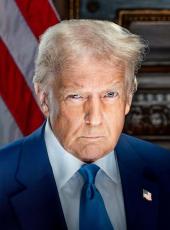
BAIER: Welcome back to Abu Dhabi, Mr. President. Thanks for the time.
PRESIDENT DONALD TRUMP: Thank you very much.
BAIER: First of all, congrats on becoming a grandfather for the 11th time.
THE PRESIDENT: Yes, most importantly.
BAIER: Tiffany uh baby Alexander.
THE PRESIDENT: That's right. They're a really good couple, great couple, I think. And uh the baby is perfect. I will let you know about it in 21 years.
BAIER: [Laughter]
THE PRESIDENT: But the baby is good, so we're happy about that. I look forward to seeing the baby.
BAIER: Seeing you with those grandkids um. This is a big trip. This is seen, especially in this region, as a major—major success with the interaction between each one of these countries. How do you see it today as you wrap it up?
THE PRESIDENT: Well, I always considered it to be a very important region. I know all three leaders, as you could see, very well. Um In all three cases, I knew them long before I ran for politics, which is sort of something. It makes it a little bit more special. Uh They're great people. The three of them, they're great people.
And it's a great region, but it was never treated properly. And it was certainly not treated well by Biden, who didn't know he was alive, frankly, so you know—you can understand that. But he was not—he didn't treat—they didn't treat this group well. And I think they were being uh and I guess you know because you have reported on it. They were being coaxed very strongly by China, 'cause that solves China's fuel problem forever.
And it wasn't their preference, but they were on their way. They were going to China, and that was going to be their – their parent. And that's not happening anymore.
BAIER: Do you think you have shifted the paradigm on that?
THE PRESIDENT: No, I don't think. I know. Uh, uh, we are as close—we're closer now to them than ever before. You could see the relationship. You could – you could get a body expert and uh pay them a lot of money they could tell you. No, there's just a relationship that I have with all three that's just uh you know very extraordinary. I was even saying— you know—we're, like, so friendly, not a normal situation where you—you know—you're OK with a leader or whatever.
But this is a very important region. This is the energy capital of the world. They have—you know—they have massive amounts of energy and other things. They have invested wisely. And they're looking to do other things. I guess, in Saudi Arabia, they said, in another couple of years, there will be more than 50 percent—other businesses represent more than 50 percent of the take.
And it's pretty amazing—pretty amazing—what all of them have done.
BAIER: You have a massive amount of business investment coming back to the U.S. --
THE PRESIDENT: Right.
BAIER:—And they're still adding it up in each country.
THE PRESIDENT: Which, by the way, most importantly, that's why I came here. I didn't come here to say, gee, you guys are rich and you have a lot of oil. They have a lot of money, and I want them to spend the money in the United States and we set records—there's never been a trip like this by any president or anybody ever before.
And I'd ask them, how about doubling it up? OK. Oh, I should have asked for more because they said OK. Uh They're good people. And they love our country. And, look, they have great danger because of Iran. That's their primary danger. And that makes them vulnerable. But I don't see them as being vulnerable, because I think we have uh we have the greatest military in the world.
And we're adding to it now at levels that nobody's ever seen. We're going to build the Iron Dome. We deserve an Iron Dome. You know—we see—we call it two names. So I was going to call it the Iron Dome because that's the name everyone has heard of for years. But, to me, it was old-fashioned. So we changed it recently to the Golden Dome, the beautiful Golden Dome. And uh --
BAIER: Matches the golden age.
THE PRESIDENT: And Ronald Reagan wanted that many years ago, and he was right, except you didn't have anywhere near the technology. --
BAIER: I want to talk about Israel. I mean, the first trip in the first administration, when you came over to the Middle East, you did do a stop in Israel on the way back. Not doing it this time. Obviously, the Israel and Hamas and what's happening in Gaza is driving a lot. How do – how do you see that? Are you frustrated at all with Prime Minister Netanyahu?
THE PRESIDENT: No, look, he's got a tough situation. Uh You have to remember there was an October 7 that everyone forgets. It was one of the most violent days in the history of the world, not the Middle East, the world, when you look at the tapes. And the tapes are there for everyone to see. So uh he has that problem. That problem should have never happened.
Now, if I were president, that problem wouldn't have happened, because Iran had no money. They were stone-cold broke, and they weren't giving money to Hamas. In fact, I remember on your show like a year before that you were saying there's no money for Hezbollah, Hamas. There's like 28 different groups.
BAIER: The Houthis.
THE PRESIDENT: The Houthis. But they had 28 groups that we know of. And none of them—they were all breaking up because there was no money. And then Biden came along, he took off all the sanctions in Iran. I mean, I put sanctions that were so strong. Anybody that did business with Iran could not do business with the United States.
THE PRESIDENT: So everybody took a pass, including China. Biden came in, and he just let everyone go by, and they became—you know—they have over $300 billion today.
BAIER: So how do you get to a solution there?
THE PRESIDENT: Oh, we will get, 100 percent.
BAIER: You think so?
THE PRESIDENT: Well, we're going to have a solution one way or the other. It's either going to be violent or not violent. And I far prefer nonviolent. I don't want—I know so many Iranians from New York, from Washington, from different places—these are great people. You have to view them as people. And I don't want it to be a violent thing, but they're not going to have a nuclear weapon.
BAIER: But you said it was close the other day. You said it was close to a deal. --
THE PRESIDENT: I think it's close. I think they want to make a deal --
BAIER:—So does that mean that they're going to enrich at any level, like a civilian level? --
THE PRESIDENT:—No, I think they want to make a deal. You say to yourself, they have massive oil, by the way. They have oil that lasts for 300 years. They have a lot of oil. People don't realize they're one of the biggest in the world. And it's very good oil, meaning it's pure, perfect stuff. They don't have to—you know—spend a fortune on gases and energy in order to melt the rock and everything.
They have pure, unadulterated, good oil. And you say, why does somebody that has that kind of oil—other than being politically correct. But when you have unlimited amounts of oil and gas, why are you putting up—you know—why do you need the civil nuclear? I just don't see it.
BAIER: But, I mean, are you going to call for it all to be dismantled? --
THE PRESIDENT: And I think nuclear is fine. I think nuclear is fine for civil if you have a country with no oil. But if you're sitting on one of the largest piles of oil in the world, why are you talking about putting up nuclear civil? I call it nuclear civil.
BAIER: And so Bibi Netanyahu is not convinced that a deal would be good for the region. Is that fair to say?
THE PRESIDENT: I think I can say that Bibi uh he's an angry man, and he should be because of October 7. And he's been hurt badly by that. But, in another way, he's been sort of helped, because I think he's fought hard and bravely.
BAIER: And you think the Israel-Hamas, the situation in Gaza is going to come to an end soon?
THE PRESIDENT: Um Gaza is a nasty place. It's been that way for years. I think it should become a free zone—freedom—I call it a freedom zone. It should become a freedom zone. But that—it doesn't work. Every 10 years, they go back. They have Hamas. They have—everybody's being killed all over the place. I mean, you – you ever see—you talk about crime stats.
It's a nasty place.
BAIER: Are these people, these countries that you were just visiting, are they going to have to be a part of the solution?
THE PRESIDENT: Well, they would be. They would be. I spoke to all three of them. They would absolutely be. I mean, they're really rich and really, really, really—even more than rich, they're good people. And they would help. Um eh So money's not even the problem.
BAIER: Well, you got to get countries to say yes to take them.
THE PRESIDENT: Look, these are people that want to be in the Middle East. They really want to be in the Middle East. They love the Middle East. I see that. There's a spirit for the Middle East. Uh They didn't have to go to Sweden, Germany, these different countries. They could have been home in the Middle East, if somebody had the brains to build beautiful communities.
You know, 1.9 million is a lot of people, but it's not a lot of people, relatively.
BAIER: You know, you had a couple of foreign policy successes even right before this trip. You picked up the phone and called two nuclear powers, India and Pakistan --
THE PRESIDENT: I did, yeah.
BAIER:—And you got them to step back from the brink. That was a success as you got on the plane heading over here.
THE PRESIDENT: A bigger success than I will ever be given credit for. That—those are major nuclear powers. Those are not like a little bit. And they were angry. And the next phase was probably—did you see where it was getting—it was tit for tat. It was getting deeper and more—I mean, more missiles. Everyone was stronger, stronger, stronger, to a point where the next one's going to be, you know what, the N-word.
THE PRESIDENT: You know what the N-word is, right?
BAIER: Nuclear.
THE PRESIDENT: Yeah.
BAIER: Thank you. Thank you for the clarification.
THE PRESIDENT: I figured you would want to clean that up. Yes.
But, no, it's the N-word. That's a very nasty word, right, in a lot of ways, the N-word used in a nuclear sense. That's the worst thing that can happen. And I think they were very close. The hatred was great. And I said, we're going to talk about trade. We're going to do a lot of trade. Don't forget, Iran wants to make a deal with us uh badly for a lot of reasons.
But when you look at India, uh they are calling—Iran wants to trade with us, OK, if you can believe that. And I'm OK with that. I'm using trade to settle scores and to make peace. But I have told Iran, we make a deal, you're going to be really—you're going to be very happy. But more than anything, I have told Iran very simply—'cause I heard somebody making my case last night on television.
I didn't like it, because they were saying, there's plenty of time, but there's not plenty of time. There's not plenty of time.
BAIER: You feel urgency?
THE PRESIDENT: Well, they're not going to have a nuclear weapon, and eventually they will have a nuclear weapon, and then the discussion becomes a much different one. --
BAIER: The other foreign policy --
THE PRESIDENT:—But, in the case of India, India wants—you know—they—they want to—they're one of the highest-taxed or tariff nations in the world. They make it almost impossible to do business. Do you know that they're willing to cut 100 percent of their tariffs for the United States --
BAIER: Is that deal coming soon?
THE PRESIDENT:—because of what I did? Yes, that will come soon. I'm in no rush. Look, everybody wants to make a deal with us.
BAIER: So South Korea.
THE PRESIDENT: South Korea wants to make a deal with us --
BAIER: India
THE PRESIDENT:—everybody.
BAIER: Japan
THE PRESIDENT: But I'm not going to make deals with everybody. I'm just going to set the limit. I'll make another—some deals. But—and then I'm just going to—because I can't—you can't meet with that many people. I have got 150 countries that want to make deals. You know, you have a lot of countries.
BAIER: The market was really happy with the China situation and the sit-down --
THE PRESIDENT: They were.
BAIER:—uh with the treasury secretary.
THE PRESIDENT: And you know what?
BAIER: Is this the beginning? --
THE PRESIDENT: If I didn't do that deal with China, I think China would have broken apart.
BAIER:—Not us, them?
THE PRESIDENT: Oh, we weren't going to break – we're not going to break. They would have broken apart. You know our country has a lot of spirit. And you know why? Because of November 5, because our country has spirit again.
BAIER: The other foreign policy shift was this embrace of Syria. Uh and you met with the Syrian president who has a—you know—shady past of being tied to Al Qaeda and the Al-Nusra Front in Syria. But you see promise there?
THE PRESIDENT: Well, before I talk about that, just one word.
BAIER: Yes.
THE PRESIDENT: Also Pakistan, great conversations with Pakistan. We can't forget them, and uh because it does take two to tango. And with India, I felt very certain. And, with Pakistan, I also talked about trade. Oh, they would love to trade—they would love to trade. They're brilliant people. They make incredible products.
And we don't do much trading with them. And yet I have a good relationship with—I have a good relationship with a lot of people that you wouldn't believe. But I stopped that war. That was going to be a nuclear war, I think, or close, very close—you were right there --
BAIER: Yes.
THE PRESIDENT:—And now everyone's happy. In fact, I told my people, call them up. Let's start trading immediately, because I'm a man of my word. Now, when you get to Syria—so I did something with Syria because the future king—and you have a wonderful king right now. He's an older man. He's also a friend of mine. And he's 100 percent sharp.
He's great. And he's got a great son, the crown prince. And he has actually many titles. He's prime minister. He's crown prince. And he's doing a great job running it. But he called me. And he spoke to me. And he said, could you do me a favor? Could you—and do the world a favor --could you take the sanctions off Syria?
Because the only way they're going to have a chance—the sanctions are crippling, really biting. Well, that's what I did with Iran, and they came to a point where they had—they were – they were bust. Could you take the sanctions off?-- I hadn't thought about it much. And he said it in a way that was—you know—he's got a great heart.
He said, they can't make it with those sanctions. I said, let's give them a chance. I met the leader. I met the new leader, and handsome guy, by the way, young, handsome. And I said, uh you have quite a past. You got a tough past. But when you think about it, are you going to put a choirboy in that position?
I don't think so. It's going to be a little bit tough. It's a tough part of the world.
BAIER: So you're willing to give him a shot?
THE PRESIDENT: You know the word. They said it's a nasty neighborhood. It's a rough neighborhood.
BAIER: Yeah.
THE PRESIDENT: And I thought he was really—yeah—I thought he was terrific. He was so thankful about the sanctions, because he knew he's not going to be able to bust—bust --through.
BAIER: So maybe it'll be a turn there. We'll see. --
THE PRESIDENT: I think he has a real chance. He's a strong guy. He's done some pretty tough things.
BAIER:—A lot of the coverage here was about your speech in Saudi Arabia --
THE PRESIDENT: Yeah.
BAIER:—and some of those things that you said about trusting these countries to make their own decisions, and we're not trying to make it a mirror image of ourselves—you know—big --
THE PRESIDENT: We have our own problems, you know?
BAIER:—foreign policy thoughts. Yes. But a lot of the coverage back home was about this donation of the Qatar Boeing jet. And I have heard you talk about it --
THE PRESIDENT: You know until you bring this up now, I haven't heard about it for three days --
BAIER:—I know, but, I mean, I'm just telling you --
THE PRESIDENT:—I mean, we can talk about it again. You ready? You ready?
BAIER:—Briefly. No, no, I heard all the answers.
THE PRESIDENT: Well, no, but your audience has to hear the answers.
BAIER: They're giving it to the Defense Department. --
THE PRESIDENT: I mean, to be very simple --
BAIER: Yes.
THE PRESIDENT:—they're giving it to the United States Air Force/Defense Department of the United States. They're not giving it to me. I made a good deal. We need a plane for a couple of years before we get the other ones, because Boeing is very late. Boeing is sadly. --
BAIER: Did you talk to the CEO while you were --
THE PRESIDENT:—I did. I said, let's get—in the meantime, I got him 160 planes to build --
BAIER:—From Qatar.
THE PRESIDENT:—I said, how about the two that you're supposed to build for our country? Now, they are different. They're extremely complex. And I'm not going to go into it --
BAIER: Yeah, yeah.
THE PRESIDENT:—But there's—they're not like a normal plane. It's not like—you know—building a 747 normal --
BAIER: I mean, we could put people on the moon before we—
THE PRESIDENT:—But let me tell you --
BAIER:—the Boeing Air Force One is done.
THE PRESIDENT: People knew I was angry at Boeing. A lot of people know. These people know. They're very smart down here. And they suggested if we can do anything at all to help, because we have 40-year-old planes right now. You know our Air Force One is actually two planes. It's two 747s --
BAIER: I don't think people know that, 40 years. It's four decades old, the current Air Force One.
THE PRESIDENT:—They're 40 years old. They're more than that. I think they're 42 now. I have been saying 40 for two years. They're 42—we shouldn't have a 42-year-old plane. And you know what? There's nothing unsafe about it. In many cases, they're just to say for more safe. They're heavier. You know they—they throw out a lot more for the environmentalists out there to turn them.
They throw out a little more than a modern engine would throw out. But—you know --they're good, but they're 42 years old. And when we landed—I saw the other day, when we landed, I was parked right next—we parked right next to the 747 of Qatar. And we parked next—there was another 747, two or three of them, which the Arab world has.
And when you look at a new 747, and you look at a plane that's 42 years old, not even the same plane, the other ones are bigger and sleeker and sharper. And—and it doesn't look right. We have a problem with Boeing. Now, again, it's a very complex plane. It's a much different plane than a normal plane would be. OK. And they're doing a great job.
They're coming back, and they're coming back strong. But I'm angry about them for the two planes. They should be able to knock 'em off in no time. And it's—they're not able to do that. And he said, great gentleman—to me, he said, I would like to help if you want. I said, how can you help? Well, we happen to have a plane.
And I said, well, what do you want to know? He said, you have been—and he doesn't mean me, although I have been good. He means our country has defended them, has done great things with them. They might not be there --
BAIER: A huge base, yeah.
THE PRESIDENT:—Look, right next to Iran. And he is right next to—he's not like an hour away, like I flew an hour to one, I flew an hour to here, but that one you don't have to fly. All you have to do is walk right across the border of you want to. I mean, it's literally touching, right, right next door. And he said, your country has been very good to us. I would love to do something to help with this situation you have with Air Force One.
I said, that's nice. What do you suggest? And he suggested this. And I said, you know what, that's very nice. That's very nice. I appreciate it. What would be the price? He said, there is no price. I said, hmm, that's nice. Now, this plane's not for me. This goes to the United States Air Force for whoever is president.
And at some point, it'll be like Ronald Reagan. It'll be decommissioned. It's 11 years old.
BAIER: So it stays until it's decommissioned.
THE PRESIDENT: Yeah, it'll be decommissioned, because they won't want it.
BAIER: Yes.
THE PRESIDENT: Plus, they will have the other two planes by that time. And they will be brand-new planes, et cetera. But I just want to say, it was a radical left story that a lot of people, including you --
BAIER: I asked the prime minister about it specifically --
THE PRESIDENT: But you know what? Yes, OK.
BAIER:—And he said he didn't understand the reaction back home. And he made that clear.
THE PRESIDENT: I think he was insulted, actually. He made a gift to help somebody that has helped them. It was so nice as a gesture. And the people here, to show you how crazy it is, they would like me to pay a billion dollars. I'd rather pay a billion and get 10 fighter jets, instead of giving a billion when it's not necessary.
BAIER: Mr. President, if you will stand by, thank you. We will continue with more from the president of the United States in Abu Dhabi after the break.
[COMMERCIAL BREAK]
BAIER: Welcome back to "Special Report" in Abu Dhabi, the UAE with President Donald J. Trump. Putin doesn't go to Turkey.
THE PRESIDENT: Yes.
BAIER: You thought about going if he was going.
THE PRESIDENT: Well, I had a problem. I mean, I consider the Middle East very important. And I had a problem because Thursday I was going to be UAE, OK, and which is where I am now. We're going to be leaving in a few hours and I have uh another couple of stops. It's a pretty grueling schedule. A lot of people said, how the hell do you do it?
BAIER: By the way, how the hell do you do it?
THE PRESIDENT: Uh I don't know. I think it's genetics. It's good genetics. I had a --
BAIER: Because I'm wiped out.
THE PRESIDENT:—father who was very strong, and I had a mother who was very strong.
They lived to ripe old ages, and they were great people. And it's meeting after meeting. And not only that, it's speech after speech.
BAIER: Big ones.
THE PRESIDENT: It's not like—big ones. Like, last night, if you look, he got up, made a beautiful speech. Mohammed, he got up and made a beautiful speech. I wasn't told I even had a speech to make. So I had to make a speech off the cuff. Do you think Biden could do that? I don't think so. Actually, it was a pretty good speech.
I looked at it. It was pretty good. I didn't know I was doing it. So, but it's meeting after meeting with the highest-level people. These are great people. They love us again. They were not feeling love at all. They were going to China. They're not going to China anymore.
BAIER: You were going to go to Turkey. Putin doesn't show. Zelenskyy shows. What do you do?
THE PRESIDENT: It was—no, no, I was never scheduled to go to Turkey.
BAIER: No, you weren't scheduled. But you were talking about maybe you would go --
THE PRESIDENT: I might have.
BAIER:—if it all came together.
THE PRESIDENT: But I—But I tell you what --
BAIER: So what do you do?
THE PRESIDENT:—I would not have wanted to disappoint UAE, because that was my stop.
BAIER: Yes, a big deal.
THE PRESIDENT: And if I went to Turkey, I couldn't go here. And um it would have been very hard for me to say I'm not doing it.
BAIER: On the substance, what do you think is going through Putin's mind?
THE PRESIDENT: I think he—I think --
BAIER: You said get to the table. You said stop bombing.
THE PRESIDENT: Yeah.
BAIER: He hasn't stopped bombing. He's not at the table. And what do you think has happened?
THE PRESIDENT: Well, he is at the table. And he wanted this meeting. And I always felt there can't be a meeting without me, because I don't think a deal is going to get through. There's a lot of hatred on both sides. Uh I have a very good relationship with him. I think we will make a deal. We have to get together. And I think we will probably schedule it because I'm tired of having other people go and meet and everything else.
With that being said, I think Steve Witkoff has done an incredible job. But it's a very tough job. And it's a—it's a job that, because of position, that I think I'm the only one that's going to be able to do that one. And I think we will do it fast too. I think Putin is tired of this whole thing. He's not—and he's not looking good.
And he wants to look good. Don't forget, this was supposed to end in one week. And if he didn't get stuck in the mud with his army tanks all over the place, they would have been in Ky--Kyiv in about five hours. And who gave the Javelins? Do you remember who gave the Javelins?
BAIER: You did.
THE PRESIDENT: Was it Barack Hussein Obama? No, it was Donald J . Trump who gave the Javelins.
BAIER: Do you think your perception of it has changed? Is Putin now the obstacle to peace, in your mind?
THE PRESIDENT: Um Look, I had a real rough session with Zelenskyy because I didn't like what he said. And he was not making it easy. And I always said he doesn't have the cards. And he doesn't have the cards. And I'm being honest. He doesn't have the cards. You're dealing with a massive army and you're dealing with somebody that's brave that had great equipment.
BAIER: But I haven't seen you get personal. On TRUTH Social, you said, Vladimir, stop. He hasn't stopped. And you had once said that maybe you need to look at other things like sanctions or banking. --
THE PRESIDENT: OK. So. --
BAIER:—Um because maybe they need to be pressured in a different way.
THE PRESIDENT: And I will be doing that --
BAIER:—And do you think the—it's time?
THE PRESIDENT:—I don't want to see 5,000 people—you know—outside of the money, which is a big deal, but the money is the money. The money, we can make up. I can make up the money on one trip like this, OK? I mean, think of it. This trip, I made 12 times the money that we're talking about. I made that money in a few days. I have always been good with the money.
BAIER: But it's not about the money. It's about pressuring Putin, right?
THE PRESIDENT: No, no, but I have always been good with money. I make money. I made in four days—I made 12 times what we spent in Ukraine. So the money is the money. What bothered me, I hated to see the way it was,—you know—excuse me, pissed away. I hated to see that checks were sent for $60 billion. Every time Zelenskyy—I think he's the greatest salesman in the world, far better than me. Zelenskyy, he comes to Washington, he walks out with $100 million every time he came, $100 billion, $100 billion.
Now, his abilities were shrinking because, the last time, he only got $60 billion. But Congress is very upset about it. They're saying, where is all this money going? --
BAIER: But I'm focused on Putin.
THE PRESIDENT:—And we send checks. We don't always send equipment. We send just checks. We send just cash. Where is it? The Europeans have been very badly hurt by this. They spent a lot of money also. They spent $100 billion. We spent 350. It shouldn't be that. It should have been the other way around. But—but --
BAIER: Are you going to put the screws to Putin?
THE PRESIDENT:—they have not been treated. Wait. They have not been treated right by anybody. This is a war that they're spending a lot of money on. We have been treated worse than them because we had a very stupid person as a president. And if I can solve that problem—and it's a bad problem, because I will tell you, Putin, it was the apple of his eye.
He never would have done it if I was president, never, ever would have done it, 100 percent. I think you even—most people, actually even Democrats say that. It wouldn't have happened. But we inherited a mess, OK? I think it's going to get solved. But you know that Putin wanted the whole thing.
BAIER: Yeah.
THE PRESIDENT: He didn't want a piece. He didn't want a chunk. He wanted the whole thing. Somebody said, well, why don't we get out of it in terms of, let's say, Ukraine?
BAIER: Right.
THE PRESIDENT: You know what they get out of it? A large portion of the country.
BAIER: I—It's just there's—Senator Lindsey Graham has 73 co-sponsors on this bill to sanction Russian oil and anybody who buys Russian oil. He's making the pitch for the bill, saying, why should China get the benefit of cheap oil from Russia as Putin continues the war? At some point, there has to be leverage on Putin.
And I assume that you have talked about that.
THE PRESIDENT: Oh, nobody uses leverage better than me. Look what I did to Iran. Look what I did --
BAIER: So it's changing?
THE PRESIDENT:—It's not changing. I always had that. I would—I will use that if I have to. I'd rather not use that. That's a—by the way, that's a big deal. I just put it on Venezuela. It's uh secondary sanctions, it's called. And I just did it with Venezuela.
BAIER: And you could do it with Iran too.
THE PRESIDENT: I just did it with Iran. It's basically, if you buy oil from Iran, you can't do business with the United States. And you see the ships just leaving that port. In Venezuela it was amazing, Chinese ships --
BAIER: But why not do it with Russia?
THE PRESIDENT:—You had to see the—well, I will if I don't—honestly, I will if we're not going to make a deal. We're going to see whether or not—this is turkey time. This is now we're talking turkey. And we will see what happens. That would be crushing for Russia, because they're having a hard time now with the economy.
Oil prices are low, you know?
BAIER: It would change the dynamic.
THE PRESIDENT: OK, so, Biden, he's incompetent. He doesn't want to see the war because he—everything he said was wrong. The way he talked about Putin, the way he said the threats, I mean, give it's just—it's just wrong. But here's what really wrong. He let oil go from $65 to $100 a barrel. Putin was making a fortune. Now I have oil down, so it's—nobody's making a fortune anymore.
And it's going to go down further because I'm drill, baby, drill, you know? He closed up everything and then he opened it. You know, when people—they said, oh, no, he's using—he closed it up and it drove oil through the roof. And then he said, go back to Trump, go back to Trump. In other words, go back to what I was doing.
And he didn't, but they did to a large extent. He didn't go all the way. And I would have been double that by that time. But he didn't go all the way. And what happened, he forced the prices up, the oil prices up. And that—Putin made a fortune during that period of time.
BAIER: Yeah. Did you see this thing with the former FBI Director James Comey?
THE PRESIDENT: I did. I just saw it on the news.
BAIER: He puts up this post showing 86 47 in the sand, saying, "Cool shell formation a beach walk." Your director of national intelligence was asked about it last night, and she said this.
[Begin video clip]
TULSI GABBARD [Video clip]: Whatever James Comey intent, he and people like him need to be held to account uh, uh according to the law, which is something that he claims to have given his life for and stands by the rule of law. Fantastic.
The rule of law says people like him who issued direct threats against the president of the United States, essentially issuing a call to assassinate him, must be held accountable under the law.
JESSE WATTERS: [Video clip] Do you believe Comey should be in jail?
GABBARD: [Video clip] I do.
[End video clip]
BAIER: Do you?
THE PRESIDENT: So I saw that this morning. You know there's a big time gap. And he knew exactly what that meant. A child knows what that meant. If you're the FBI director and you don't know what that meant—that meant assassination. And it says it loud and clear. Now, he wasn't very competent, but he was competent enough to know what that meant.
And he did it for a reason, and he was hit so hard, because people like me. They like what's happening with our country. Our country's become respected again. And all this—and he's calling for the assassination of the president.
BAIER: Obviously, he apologized and said he doesn't—
THE PRESIDENT: Well, he apologized because --
BAIER:—wasn't calling for violence. --
THE PRESIDENT:—he was hit. Look, he's a very bad—look, he is a very --
BAIER:—What do you want to see happen? What do you want to see happen?
THE PRESIDENT: Uh I don't want to take a position on it, because that's going to be up to Pam and all of the great people I have. I have Kash. I have Pam. I have great people. And I'm going to let them, because if I tell you something, they will say, oh, I'm not going to get involved. But I will say this. I think it's a terrible thing.
And when you add his history to that, if he had a clean history—he doesn't. He's a dirty cop. He's a dirty cop. And if he had a clean history, I could—I could—understand if there was a leniency. But I'm going to let them make that decision.
BAIER: But are you going to --
THE PRESIDENT: But he knew—he knew exactly what it said.
BAIER:—It's a dangerous time. It's—I see security around here. It's very tight. You're in the Middle East. You have had two assassination attempts, one, obviously, where you got hit by that bullet in Butler. There's a lot of frustration that we still don't know about that shooter in Butler. And we don't know about his communications.
We get stonewalled all the time asking questions about it.
THE PRESIDENT: Yeah.
BAIER: Is there frustration on your part? Do we—will we get transparency? Will we know the bottom-line story?
THE PRESIDENT: It's very interesting because we have great people. I think Pam is incredible. I think Kash is incredible. And they're doing a great job. They being recognized as doing a great job. Um I was given an explanation early on,—you know—sort of a little bit pre them. And I thought it was strange. The one guy had 18 cell phones, OK? I have a lot of cell phones, but I have like two.
That's—I call that a lot. And I think I probably make more calls than him. It's like that's all I do. And I had to—why does somebody have 18? Another one, the first one, one from Butler, he had three apps, very unusual apps, and two of them were foreign apps. And then he ends up with a white shoe lawyer, meaning a super lawyer from Pittsburgh,—you know—in the big city.
And they live outside of Butler in a little place. Where do they get this lawyer that would represent IBM and would represent ExxonMobil?
BAIER: But you're the president. Can't you find out?
THE PRESIDENT: No, no, I know, I know, I know. I'm relying on my people to tell me what it is. You know we have deep-seated craziness in this country, and I'm relying on my people, and so far they—and they're good. But so far, they—and in this case, it's Secret Service. They tell me it's fine. But it's a little hard to believe, to be honest with you, OK? It's a little bit hard to believe as I get that throbbing feeling.
BAIER: Yeah, yeah.
THE PRESIDENT: I get a little throbbing feeling otherwise.
BAIER: Well, if you find out, we'd love to know. We can continue to ask --
THE PRESIDENT: Yes. Yes, I know, I know. No.
BAIER:—And a lot of people ask us.
THE PRESIDENT: It's a little bit—it's a little bit strange. We have incredible people in there now, so can't blame that.
BAIER: Well, you have been very generous with your time. I will just wrap it up with this. This is, in the minds of Democrats, Republicans, a very successful trip, big picture. Because it's this way, do you want to do more foreign policy trips? Do you want to go talk to China's Xi Jinping? You're a force of personality as far as getting things done on a business front.
Do you think that that's the model that you're going to have going forward?
THE PRESIDENT: Yeah. Yeah. So, well, it's a very hard model. It's a very taxing model when you do this. So, when you say, do you want—is it fun?
BAIER: Yeah.
THE PRESIDENT: Uh Now, I did say I was standing next to all three of them over the last few days, and with tremendous fanfare and everyone going crazy and everything else. It's at a level that nobody's ever seen before, honestly.
Nobody has every—I'm getting calls back in the United States, we have never seen anything like this. It's so good for our country, so I will do it again—I will do it. And, yeah, I would—certainly, China, where it's important. That's—that's important in a different way. This was very important uh to keep in our fold.
It's just—they're in our fold. They are back loving the United States again. That was a full embrace, and nobody's ever seen anything like it. I mean, seriously, I asked, have you ever done this before? Last night, two nights ago. I said, have you ever done anything for another—no. Would you? No. Not even close, with the hundreds of camels and horses and the this.
It was beautiful, I mean, all three, all three. If you said, which was the best, I couldn't tell you. And they were different. They were all at the top level. Nobody's ever seen anything like it. It was an honor. But that really—to me, it showed love. It showed—you know—there's a love. It's almost like they were shut out for a long time, just shut out and treated horribly, and they shouldn't have been.
And all of a sudden, they were allowed back in and they give you an embrace that's 20 times what it perhaps should be. I mean, it was just a beautiful thing to see. So we're in great shape. The Middle East is great. Now, we have one problem in the Middle East, Iran, and I will get that problem solved. I mean, it's going to get solved one way or the other.
BAIER: Hamas and Israel, that's eventually going to get solved too?
THE PRESIDENT: Well, that's a big problem. I think Iran is right now the big problem. That's also a problem. Hamas has been—and we want to take care of the people. Look, people are starving. You know, you see what's going on right now. People are starving. One of the things that one of the three great leaders that I saw—I saw two nights ago said to me, please help the people, the Palestinians.
I said, other than the obvious, what do you mean by that? He said, they're starving. And he meant it with his heart. They're starving. So I have already started working on that. It's a deep problem, but we will get it solved. And a very immediate and a very big problem is—I'm so proud of what we were able to do with India and with Pakistan.
Well, it's a potential problem like that, that we have here. Uh I will get it solved. And one way or the other, I will get it solved. It's either going to be done nicely or it's going to be done violently. And I—I really—99.9 percent want to do it nicely if we can.
BAIER: Well, Mr. President, we appreciate the time. Safe travels home. Thank you very much.
THE PRESIDENT: Thank you very much. Thank you, Bret. Good job.
BAIER: And, with that, we wrap up our trip here in the Middle East. We will be heading home. I will be back in the states on Monday. That's it from Abu Dhabi. I will send it back to Jacqui Heinrich in Washington.
Donald J. Trump (2nd Term), Interview with Bret Baier of Fox News Online by Gerhard Peters and John T. Woolley, The American Presidency Project https://www.presidency.ucsb.edu/node/385148
Filed Under
Categories
Location