
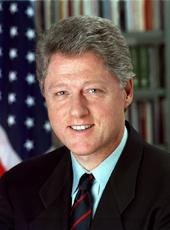
By the President of the United States of America
A Proclamation
American Indians and Alaska Natives—the first Americans—have made enormous contributions to the life of our country. When the first Europeans arrived on this continent, they did not find an empty land; they found instead a land of diverse peoples with a rich and complex system of governments, languages, religions, values, and traditions that have shaped and influenced American history and heritage. Generations of American Indians have served and sacrificed to defend our freedom, and no segment of our population has sent a larger percentage of its young men and women to serve in our Armed Forces. But American Indians are not just an important part of our country's past; they are also a vital part of today's America and will play an even more important role in America's future.
There are more than 2 million American Indians living in our country today, from the hardwood forests of Maine to the Florida Everglades, across the Great Plains to the Pacific Coast, and throughout the State of Alaska. Through a variety of innovative enterprises, many tribes are sharing in the unprecedented prosperity our country enjoys today, prosperity that is reflected in the construction of community centers, schools, museums, and other cultural centers. However, many people who live in Indian Country are caught in a cycle of poverty made worse by poor health care and a lack of educational and employment opportunity. If we are to honor the United States Government's long-standing obligations to Indian tribes, we must do all in our power to ensure that American Indians have access to the tools and opportunities they need to make the most of their lives.
As part of this endeavor, my Administration has strengthened the special government-to-government relationship between the Federal Government and the sovereign nations of Indian Country, expanded the role of American Indians and Alaska Natives in the Administration, and sought to increase educational opportunities and economic development throughout Indian Country. Earlier this year, I signed an Executive order directing the Federal Government to work together with tribal and State governments to improve Native American achievement in math and reading, raise high school graduation rates, increase the number of Native American youth attending college, improve science education, and expand the use of educational technology. We are also striving to boost economic development in Indian Country by working with tribal governments to meet their technology infrastructure needs, to coordinate and strengthen existing Native American economic development initiatives, and to help Native Americans obtain loans more easily for building homes and starting new businesses.
Today's Native Americans are among the youngest segments of our population—a new, large generation of young people who, if empowered with the education, skills, opportunity, and encouragement they need to thrive, can lead Indian Country into a future as bright and promising as its extraordinary past. As we observe National American Indian Heritage Month, let us resolve to work together to make that future a reality.
Now, Therefore, I, William J. Clinton, President of the United States of America, by virtue of the authority vested in me by the Constitution and laws of the United States, do hereby proclaim November 1998 as National American Indian Heritage Month. I urge all Americans, as well as their elected representatives at the Federal, State, local, and tribal levels, to observe this month with appropriate programs, ceremonies, and activities.
In Witness Whereof, I have hereunto set my hand this twenty-ninth day of October, in the year of our Lord nineteen hundred and ninety-eight, and of the Independence of the United States of America the two hundred and twenty-third.
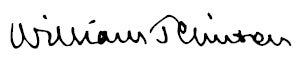
WILLIAM J. CLINTON
William J. Clinton, Proclamation 7144—National American Indian Heritage Month, 1998 Online by Gerhard Peters and John T. Woolley, The American Presidency Project https://www.presidency.ucsb.edu/node/225340