
Executive Order 13848—Imposing Certain Sanctions in the Event of Foreign Interference in a United States Election
By the authority vested in me as President by the Constitution and the laws of the United States of America, including the International Emergency Economic Powers Act (50 U.S.C. 1701 et seq.) (IEEPA), the National Emergencies Act (50 U.S.C. 1601 et seq.) (NEA), section 212(f) of the Immigration and Nationality Act of 1952 (8 U.S.C. 1182(f)), and section 301 of title 3, United States Code,
I, Donald J. Trump, President of the United States of America, find that the ability of persons located, in whole or in substantial part, outside the United States to interfere in or undermine public confidence in United States elections, including through the unauthorized accessing of election and campaign infrastructure or the covert distribution of propaganda and disinformation, constitutes an unusual and extraordinary threat to the national security and foreign policy of the United States. Although there has been no evidence of a foreign power altering the outcome or vote tabulation in any United States election, foreign powers have historically sought to exploit America's free and open political system. In recent years, the proliferation of digital devices and internet-based communications has created significant vulnerabilities and magnified the scope and intensity of the threat of foreign interference, as illustrated in the 2017 Intelligence Community Assessment. I hereby declare a national emergency to deal with this threat.
Accordingly, I hereby order:
Section 1. (a) Not later than 45 days after the conclusion of a United States election, the Director of National Intelligence, in consultation with the heads of any other appropriate executive departments and agencies (agencies), shall conduct an assessment of any information indicating that a foreign government, or any person acting as an agent of or on behalf of a foreign government, has acted with the intent or purpose of interfering in that election. The assessment shall identify, to the maximum extent ascertainable, the nature of any foreign interference and any methods employed to execute it, the persons involved, and the foreign government or governments that authorized, directed, sponsored, or supported it. The Director of National Intelligence shall deliver this assessment and appropriate supporting information to the President, the Secretary of State, the Secretary of the Treasury, the Secretary of Defense, the Attorney General, and the Secretary of Homeland Security.
(b) Within 45 days of receiving the assessment and information described in section 1(a) of this order, the Attorney General and the Secretary of Homeland Security, in consultation with the heads of any other appropriate agencies and, as appropriate, State and local officials, shall deliver to the President, the Secretary of State, the Secretary of the Treasury, and the Secretary of Defense a report evaluating, with respect to the United States election that is the subject of the assessment described in section 1(a):
(i) the extent to which any foreign interference that targeted election infrastructure materially affected the security or integrity of that infrastructure, the tabulation of votes, or the timely transmission of election results; and
(ii) if any foreign interference involved activities targeting the infrastructure of, or pertaining to, a political organization, campaign, or candidate, the extent to which such activities materially affected the security or integrity of that infrastructure, including by unauthorized access to, disclosure or threatened disclosure of, or alteration or falsification of, information or data.
The report shall identify any material issues of fact with respect to these matters that the Attorney General and the Secretary of Homeland Security are unable to evaluate or reach agreement on at the time the report is submitted. The report shall also include updates and recommendations, when appropriate, regarding remedial actions to be taken by the United States Government, other than the sanctions described in sections 2 and 3 of this order.
(c) Heads of all relevant agencies shall transmit to the Director of National Intelligence any information relevant to the execution of the Director's duties pursuant to this order, as appropriate and consistent with applicable law. If relevant information emerges after the submission of the report mandated by section 1(a) of this order, the Director, in consultation with the heads of any other appropriate agencies, shall amend the report, as appropriate, and the Attorney General and the Secretary of Homeland Security shall amend the report required by section 1(b), as appropriate.
(d) Nothing in this order shall prevent the head of any agency or any other appropriate official from tendering to the President, at any time through an appropriate channel, any analysis, information, assessment, or evaluation of foreign interference in a United States election.
(e) If information indicating that foreign interference in a State, tribal, or local election within the United States has occurred is identified, it may be included, as appropriate, in the assessment mandated by section 1(a) of this order or in the report mandated by section 1(b) of this order, or submitted to the President in an independent report.
(f) Not later than 30 days following the date of this order, the Secretary of State, the Secretary of the Treasury, the Attorney General, the Secretary of Homeland Security, and the Director of National Intelligence shall develop a framework for the process that will be used to carry out their respective responsibilities pursuant to this order. The framework, which may be classified in whole or in part, shall focus on ensuring that agencies fulfill their responsibilities pursuant to this order in a manner that maintains methodological consistency; protects law enforcement or other sensitive information and intelligence sources and methods; maintains an appropriate separation between intelligence functions and policy and legal judgments; ensures that efforts to protect electoral processes and institutions are insulated from political bias; and respects the principles of free speech and open debate.
Sec. 2. (a) All property and interests in property that are in the United States, that hereafter come within the United States, or that are or hereafter come within the possession or control of any United States person of the following persons are blocked and may not be transferred, paid, exported, withdrawn, or otherwise dealt in: any foreign person determined by the Secretary of the Treasury, in consultation with the Secretary of State, the Attorney General, and the Secretary of Homeland Security:
(i) to have directly or indirectly engaged in, sponsored, concealed, or otherwise been complicit in foreign interference in a United States election;
(ii) to have materially assisted, sponsored, or provided financial, material, or technological support for, or goods or services to or in support of, any activity described in subsection (a)(i) of this section or any person whose property and interests in property are blocked pursuant to this order; or
(iii) to be owned or controlled by, or to have acted or purported to act for or on behalf of, directly or indirectly, any person whose property or interests in property are blocked pursuant to this order. (b) Executive Order 13694 of April 1, 2015, as amended by Executive Order 13757 of December 28, 2016, remains in effect. This order is not intended to, and does not, serve to limit the Secretary of the Treasury's discretion to exercise the authorities provided in Executive Order 13694. Where appropriate, the Secretary of the Treasury, in consultation with the Attorney General and the Secretary of State, may exercise the authorities described in Executive Order 13694 or other authorities in conjunction with the Secretary of the Treasury's exercise of authorities provided in this order.
(c) The prohibitions in subsection (a) of this section apply except to the extent provided by statutes, or in regulations, orders, directives, or licenses that may be issued pursuant to this order, and notwithstanding any contract entered into or any license or permit granted prior to the date of this order.
Sec. 3. Following the transmission of the assessment mandated by section 1(a) and the report mandated by section 1(b):
(a) the Secretary of the Treasury shall review the assessment mandated by section 1(a) and the report mandated by section 1(b), and, in consultation with the Secretary of State, the Attorney General, and the Secretary of Homeland Security, impose all appropriate sanctions pursuant to section 2(a) of this order and any appropriate sanctions described in section 2(b) of this order; and
(b) the Secretary of State and the Secretary of the Treasury, in consultation with the heads of other appropriate agencies, shall jointly prepare a recommendation for the President as to whether additional sanctions against foreign persons may be appropriate in response to the identified foreign interference and in light of the evaluation in the report mandated by section 1(b) of this order, including, as appropriate and consistent with applicable law, proposed sanctions with respect to the largest business entities licensed or domiciled in a country whose government authorized, directed, sponsored, or supported election interference, including at least one entity from each of the following sectors: financial services, defense, energy, technology, and transportation (or, if inapplicable to that country's largest business entities, sectors of comparable strategic significance to that foreign government). The recommendation shall include an assessment of the effect of the recommended sanctions on the economic and national security interests of the United States and its allies. Any recommended sanctions shall be appropriately calibrated to the scope of the foreign interference identified, and may include one or more of the following with respect to each targeted foreign person:
(i) blocking and prohibiting all transactions in a person's property and interests in property subject to United States jurisdiction;
(ii) export license restrictions under any statute or regulation that requires the prior review and approval of the United States Government as a condition for the export or re-export of goods or services;
(iii) prohibitions on United States financial institutions making loans or providing credit to a person;
(iv) restrictions on transactions in foreign exchange in which a person has any interest;
(v) prohibitions on transfers of credit or payments between financial institutions, or by, through, or to any financial institution, for the benefit of a person;
(vi) prohibitions on United States persons investing in or purchasing equity or debt of a person;
(vii) exclusion of a person's alien corporate officers from the United States;
(viii) imposition on a person's alien principal executive officers of any of the sanctions described in this section; or
(ix) any other measures authorized by law.
Sec. 4. I hereby determine that the making of donations of the type of articles specified in section 203(b)(2) of IEEPA (50 U.S.C. 1702(b)(2)) by, to, or for the benefit of any person whose property and interests in property are blocked pursuant to this order would seriously impair my ability to deal with the national emergency declared in this order, and I hereby prohibit such donations as provided by section 2 of this order.
Sec. 5. The prohibitions in section 2 of this order include the following:
(a) the making of any contribution or provision of funds, goods, or services by, to, or for the benefit of any person whose property and interests in property are blocked pursuant to this order; and
(b) the receipt of any contribution or provision of funds, goods, or services from any such person.
Sec. 6. I hereby find that the unrestricted immigrant and nonimmigrant entry into the United States of aliens whose property and interests in property are blocked pursuant to this order would be detrimental to the interests of the United States, and I hereby suspend entry into the United States, as immigrants or nonimmigrants, of such persons. Such persons shall be treated as persons covered by section 1 of Proclamation 8693 of July 24, 2011 (Suspension of Entry of Aliens Subject to United Nations Security Council Travel Bans and International Emergency Economic Powers Act Sanctions).
Sec. 7. (a) Any transaction that evades or avoids, has the purpose of evading or avoiding, causes a violation of, or attempts to violate any of the prohibitions set forth in this order is prohibited.
(b) Any conspiracy formed to violate any of the prohibitions set forth in this order is prohibited.
Sec. 8. For the purposes of this order:
(a) the term "person" means an individual or entity;
(b) the term "entity" means a partnership, association, trust, joint venture, corporation, group, subgroup, or other organization;
(c) the term "United States person" means any United States citizen, permanent resident alien, entity organized under the laws of the United States or any jurisdiction within the United States (including foreign branches), or any person (including a foreign person) in the United States;
(d) the term "election infrastructure" means information and communications technology and systems used by or on behalf of the Federal Government or a State or local government in managing the election process, including voter registration databases, voting machines, voting tabulation equipment, and equipment for the secure transmission of election results;
(e) the term "United States election" means any election for Federal office held on, or after, the date of this order;
(f) the term "foreign interference," with respect to an election, includes any covert, fraudulent, deceptive, or unlawful actions or attempted actions of a foreign government, or of any person acting as an agent of or on behalf of a foreign government, undertaken with the purpose or
effect of influencing, undermining confidence in, or altering the result or reported result of, the election, or undermining public confidence in election processes or institutions;
(g) the term "foreign government" means any national, state, provincial, or other governing authority, any political party, or any official of any governing authority or political party, in each case of a country other than the United States;
(h) the term "covert," with respect to an action or attempted action, means characterized by an intent or apparent intent that the role of a foreign government will not be apparent or acknowledged publicly; and
(i) the term "State" means the several States or any of the territories, dependencies, or possessions of the United States.
Sec. 9. For those persons whose property and interests in property are blocked pursuant to this order who might have a constitutional presence in the United States, I find that because of the ability to transfer funds or other assets instantaneously, prior notice to such persons of measures to be taken pursuant to this order would render those measures ineffectual. I therefore determine that for these measures to be effective in addressing the national emergency declared in this order, there need be no prior notice of a listing or determination made pursuant to section 2 of this order.
Sec. 10. Nothing in this order shall prohibit transactions for the conduct of the official business of the United States Government by employees, grantees, or contractors thereof.
Sec. 11. The Secretary of the Treasury, in consultation with the Attorney General and the Secretary of State, is hereby authorized to take such actions, including the promulgation of rules and regulations, and to employ all powers granted to the President by IEEPA as may be necessary to carry out the purposes of this order. The Secretary of the Treasury may re-delegate any of these functions to other officers within the Department of the Treasury consistent with applicable law. All agencies of the United States Government are hereby directed to take all appropriate measures within their authority to carry out the provisions of this order.
Sec. 12. The Secretary of the Treasury, in consultation with the Attorney General and the Secretary of State, is hereby authorized to submit the recurring and final reports to the Congress on the national emergency declared in this order, consistent with section 401(c) of the NEA (50 U.S.C. 1641(c)) and section 204(c) of IEEPA (50 U.S.C. 1703(c)).
Sec. 13. This order shall be implemented consistent with 50 U.S.C. 1702(b)(1) and (3).
Sec. 14. (a) Nothing in this order shall be construed to impair or otherwise affect:
(i) the authority granted by law to an executive department or agency, or the head thereof; or
(ii) the functions of the Director of the Office of Management and Budget relating to budgetary, administrative, or legislative proposals.
(b) This order shall be implemented consistent with applicable law and subject to the availability of appropriations.
(c) This order is not intended to, and does not, create any right or benefit, substantive or procedural, enforceable at law or in equity by any party against the United States, its departments, agencies, or entities, its officers, employees, or agents, or any other person.
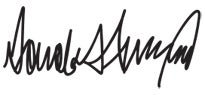
DONALD J. TRUMP
The White House,
September 12, 2018.
NOTE: This Executive order was published in the Federal Register on September 14.
Donald J. Trump (1st Term), Executive Order 13848—Imposing Certain Sanctions in the Event of Foreign Interference in a United States Election Online by Gerhard Peters and John T. Woolley, The American Presidency Project https://www.presidency.ucsb.edu/node/333164