
Executive Order 8807—Establishing the Office of Scientific Research and Development in the Executive Office of the President and Defining Its Functions and Duties
By virtue of the authority vested in me by the Constitution and the statutes of the United States, and in order to define further the functions and duties of the Office for Emergency Management with respect to the unlimited national emergency as declared by the President on May 27, 1941, for the purpose of assuring adequate provision for research on scientific and medical problems relating to the national defense, it is hereby ordered:
1. There shall be within the Office for Emergency Management of the Executive Office of the President the Office of Scientific Research and Development, at the head of which shall be a Director appointed by the President. The Director shall discharge and perform his responsibilities and duties under the direction and supervision of the President. The Director shall receive compensation at such rate as the President shall determine and, in addition, shall be entitled to actual and necessary transportation, subsistence, and other expenses incidental to the performance of his duties.
2. Subject to such policies, regulations, and directions as the President may from time to time prescribe, and with such advice and assistance as may be necessary from the other departments and agencies of the Federal Government, the Office of Scientific Research and Development shall:
a. Advise the President with regard to the status of scientific and medical research relating to national defense and the measures necessary to assure continued and increasing progress in this field.
b. Serve as the center for the mobilization of the scientific personnel and resources of the Nation in order to assure maximum utilization of such personnel and resources in developing and applying the results of scientific research to defense purposes.
c. Coordinate, aid, and, where desirable, supplement the experimental and other scientific and medical research activities relating to national defense carried on by the Departments of War and Navy and other departments and agencies of the Federal Government.
d. Develop broad and coordinated plans for the conduct of scientific research in the defense program, in collaboration with representatives of the War and Navy Departments; review existing scientific research programs formulated by the Departments of War and Navy and other agencies of the Government, and advise them with respect to the relationship of their proposed activities to the total research program.
e. Initiate and support scientific research on the mechanisms and devices of warfare with the objective of creating, developing, and improving instrumentalities, methods, and materials required for national defense.
f. Initiate and support scientific research on medical problems affecting the national defense.
g. Initiate and support such scientific and medical research as may be requested by the Government of any country whose defense the President deems vital to the defense of the United States under the terms of the Act of March 11, 1941, entitled "An Act to Promote the Defense of the United States"; and serve as the central liaison office for the conduct of such scientific and medical research for such countries.
h. Perform such other duties relating to scientific and medical research and development as the President may from time to time assign or delegate to it.
3. The Director may provide for the internal organization and management of the Office of Scientific Research and Development and may appoint such advisory committees as he finds necessary to the performance of his duties and responsibilities. The Director shall obtain the President's approval for the establishment of the principal subdivisions of the agency and the appointment of the heads thereof.
4. In carrying out its functions, the Office of Scientific Research and Development shall utilize the laboratories, equipment, and services of governmental agencies and institutions to the extent that such facilities are available for such purposes. Within the limits of funds appropriated or allocated for purposes encompassed by this Order, the Director may contract with and transfer funds to existing governmental agencies and institutions, and may enter into contracts and agreements with individuals, educational and scientific institutions (including the National Academy of Sciences and the National Research Council), industrial organizations, and other agencies, for studies, experimental investigations, and reports.
5. The Director is authorized to take over and carry out the provisions of any contracts which fall within the scope of this Order heretofore entered into by (1) the National Defense Research Committee, established by order of the Council of National Defense on June 27, 1940, (2) the Health and Medical Committee, established by order of the Council of National Defense on September 19, 1940, and (3) the Federal Security Administrator in his capacity of Coordinator of Health, Medical, Welfare, Nutrition, Recreation, and other related activities as authorized by order of the Council of National Defense on November 28, 1940. The Director is further authorized to assume any obligations or responsibilities which have heretofore been undertaken by the above agencies for and on behalf of the United States Government and which fall within the scope of this Order.
6. There is created within the Office of Scientific Research and Development an Advisory Council consisting of the Director as Chairman, the Chairman of the National Advisory Committee for Aeronautics, the Chairman of the National Defense Research Committee (hereinafter described), the Chairman of the Committee on Medical Research (hereinafter described), one representative of the Army to be designated by the Secretary of War, and one representative of the Navy to be designated by the Secretary of the Navy. The Council shall advise and assist the Director with respect to the coordination of research activities carried on by private and governmental research groups and shall facilitate the interchange of information and data between such groups and agencies.
7. There shall be within the Office of Scientific Research and Development a National Defense Research Committee consisting of a Chairman and three other members appointed by the President, and in addition the President of the National Academy of Sciences, the Commissioner of Patents, one officer of the Army to be designated by the Secretary of War, one officer of the Navy to be designated by the Secretary of the Navy, and such other members as the President may subsequently appoint. The National Defense Research Committee shall advise and assist the Director in the performance of his scientific research duties with special reference to the mobilization of the scientific personnel and resources of the Nation. To this end it shall be the responsibility of the Committee to recommend to the Director the need for and character of contracts to be entered into with universities, research institutes, and industrial laboratories for research and development on instrumentalities of warfare to supplement such research and development activities of the Departments of War and the Navy. Furthermore, the Committee shall from time to time make findings, and submit recommendations to the Director with respect to the adequacy, progress, and results of research on scientific problems related to national defense.
8. There shall be within the Office of Scientific Research and Development a Committee on Medical Research consisting of a Chairman and three members to be appointed by the President, and three other members to be designated respectively by the Secretary of War, the Secretary of the Navy, and the Administrator of the Federal Security Agency. The members so designated by the Secretaries of War and Navy and the Federal Security Administrator shall be selected from the respective staffs of the Surgeons General and the Surgeon General of the Public Health Service with particular reference to their qualifications in the field of medical research. The Committee on Medical Research shall advise and assist the Director in the performance of his medical research duties with special reference to the mobilization of medical and scientific personnel of the Nation. To this end it shall be the responsibility of the Committee to recommend to the Director the need for and character of contracts to be entered into with universities, hospitals, and other agencies conducting medical research activities for research and development in the field of the medical sciences. Furthermore, the Committee shall from time to time, on request by the Director, make findings and submit recommendations with respect to the adequacy, progress, and results of research on medical problems related to national defense.
9. The members of the Advisory Council, the National Defense Research Committee, the Committee on Medical Research, and such other committees and subcommittees as the Director may appoint with the approval of the President shall serve as such without compensation, but shall be entitled to necessary and actual transportation, subsistence, and other expenses incidental to the performance of their duties.
10. Within the limits of such funds as may be appropriated to the Office of Scientific Research and Development or as may be allocated to it by the President, the Director may employ necessary personnel and make provision for necessary supplies, facilities, and services. However, the Director shall use such statistical, informational, fiscal, personnel, and other general business services and facilities as may be made available to him through the Office for Emergency Management.

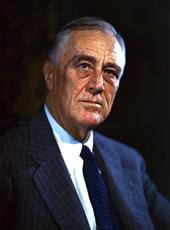
FRANKLIN D ROOSEVELT
The White House,
June 28, 1941.
Franklin D. Roosevelt, Executive Order 8807—Establishing the Office of Scientific Research and Development in the Executive Office of the President and Defining Its Functions and Duties Online by Gerhard Peters and John T. Woolley, The American Presidency Project https://www.presidency.ucsb.edu/node/209713